
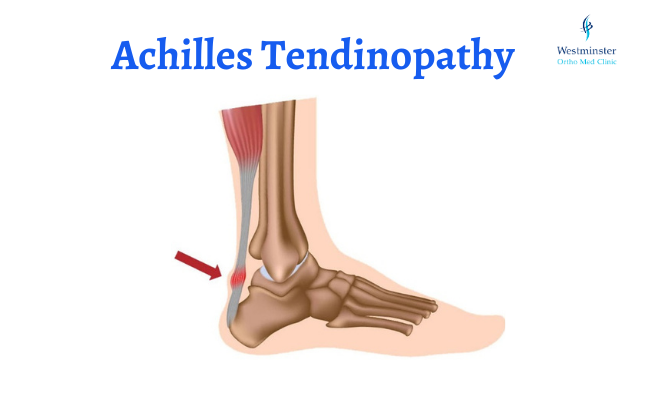
Achilles tendinopathy is a condition that causes pain, swelling and stiffness of the Achilles tendon that joins your heel bone to your calf muscles. It is thought to be caused by repeated tiny injuries to the Achilles tendon. These may occur for a number of reasons, including overuse of the tendon – for example, in runners. Treatment includes rest, ice packs, painkillers and special exercises to help to stretch and strengthen the Achilles tendon. For most people, the symptoms of Achilles tendinopathy usually clear within 3-6 months of starting treatment.
How common is Achilles Tendinopathy?
- It is one of the most common injuries in sport and can account for approx 6-17% of all
- Running injuries and up to 50% of injuries in elite athletes.
- However, it can also develop in 6% of nonathletic populations.
- It can predominantly affect male athletes aged 30-40 years. (NICE, 2010).
What are the signs and symptoms of Achilles Tendinopathy?
- Morning stiffness
- Tenderness over the Achilles tendon
- Pain on either exercise or after exercise
Many things can affect the load being put through the tendon. Age, gender, weight, diabetes, having tight or weak calf muscles, stiff joints of the ankle, knee or foot and over-exercising can all impact on your prevalence to placing increased stress on the tendon.
Initial treatment guidelines
Rest:
Acute injuries require rest. This may involve reducing the level of your normal training regime or functional activities. By continuing to exercise on a painful Achilles tendon will likely make it more chronic thus becoming more difficult to treat. It is advisable to avoid any high impact activities or sports until your pain subsides. By modifying your activity, this will help to reduce pain, allow any inflammation to settle and minimize stress placed on the tendon.
2. Ice
During the initial stages of injury, ice treatment can be useful in managing pain and swelling. Apply a pack of frozen peas or an ice pack wrapped in a damp cloth to the tendon. Always check the skin following ice application for any skin burns. Leave this on for no more than 10 minutes, repeat up to 4 times per day or after exercise. If symptoms continue to persist after several weeks, ice can be beneficial in minimizing further tendon damage. Apply ice following any physical activity.
3. Pain relief
Simple analgesics such as paracetamol or Non Steroidal Anti-Inflammatory (NSAIDs) can help relieve pain. Care should be taken with NSAIDS, you may need to limit use to no more than 14 days. Prolonged use of NSAIDs may impede tissue healing long term. Please consult your doctor regarding NSAIDs use.
4. Orthotics
The use of a heel pad can also help raise the heel therefore reducing the strain on the Achilles tendon. Further gait analysis and bespoke orthotics would be beneficial for chronic conditions. Healing time frames In acute injuries, symptoms can normally take 3 to 6 months to resolve. In more chronic cases, it may take longer.
5. Physiotherapy management
Depending on the severity and stage of the condition, physiotherapy treatment for patients with an Achilles tendinopathy is vital to hasten the healing process, to ensure an optimal outcome and reduced the likelihood of recurrence. Treatments may often involve:
- Soft Tissue techniques
- Electrotherapy
- Stretching programme
- Joint mobilisations
- Gait Analysis and Orthotics
- Taping
- Hydrotherapy
- An eccentric loading exercise training programme
- Prescribe a rehabilitation programme and return to activity plan
- Acupuncture
- Advice and education
6. Eccentric exercise programme
Eccentric loading involves lengthening the muscle fibres as contraction occurs. Research evidence suggests that an eccentric exercise approach aims to reduce tendon thickness and promotes tissue repair. Emphasis is placed on the lowering phase of the exercise to ensure that the tendon is loaded sufficiently (Alfredson & Cook, 2007). It is recommended that Eccentric Exercise Programmes are followed for a period of 12 weeks to promote optimum recovery.
It is also important to note that during an eccentric exercise programme, you may experience an increase in pain, for up to 8 weeks, but this will reduce as you continue with the exercises.
Reference
- Alfredson, H. and Cook, J. 2007. A treatment algorithm for managing Achilles tendinopathy: new treatment options. British Journal of Sports Medicine 41(4), 211-216.
- NICE, 2010. Achilles Tendinopathy. Clinical Knowledge Summaries. http://cks.nice.org.uk/achillestendinopathy#!topicsummary.
- nhs.uk
- www.versusarthritis.org/about-arthritis/conditions/foot-and-ankle-pain/
Comments
Binance Referral Bonus
binance
Skapa ett gratis konto
Binance代码
binance US-registrera
бнанс реферальна програма