
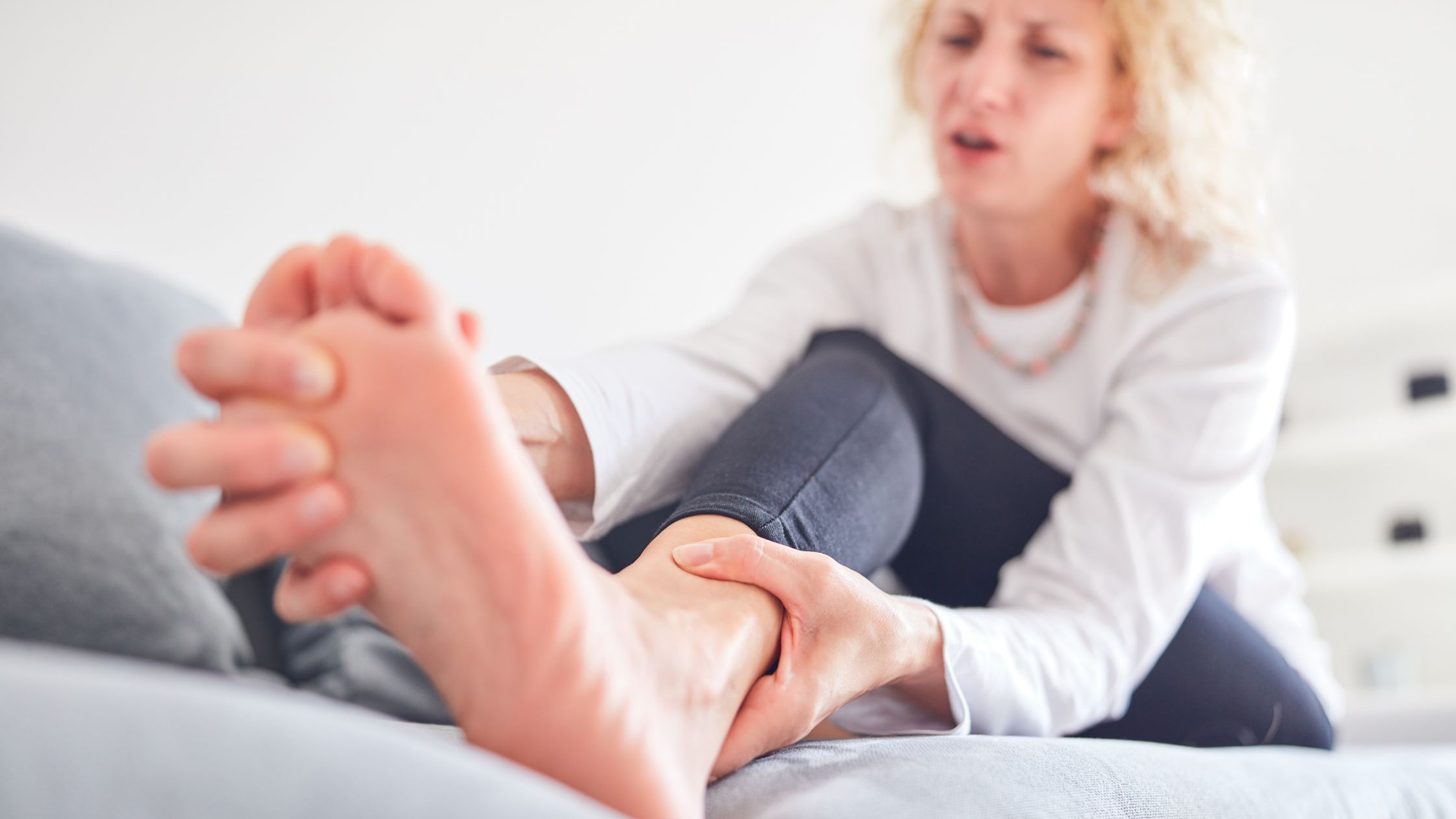
Most people give their feet very little thought until something hurts. You pull on your shoes in the morning, get through the day, and kick them off at night without a second consideration for what is happening underneath. But your feet are the foundation of everything your body does when it is upright, and the shape of that foundation has a direct influence on joints that are nowhere near your ankles.
If you have ever been told you have flat feet, or noticed that your arches seem unusually high, you may have wondered whether it actually matters. The answer, in most cases, is yes. Not in a way that should cause alarm, but in a way that is genuinely worth understanding.

The Foot Is Not Just a Platform
It is easy to think of the foot as simply the thing that connects you to the ground. In reality it is a remarkably engineered structure made up of 26 bones, 33 joints, and over a hundred muscles, tendons, and ligaments. Its job is not just to support weight but to absorb shock, adapt to uneven surfaces, and transfer force efficiently upward through the ankle, knee, hip, and spine.
When that transfer of force is clean and well-distributed, the joints above the foot share the load evenly and function without issue. When the foot’s architecture is compromised, whether it sits too flat or too high, that force travels unevenly. The joints above it compensate. And over time, that compensation adds up.
This is why a podiatric or orthopedic assessment of the foot is never really just about the foot. It is about the whole chain of movement that starts the moment you take a step.
What Flat Feet Actually Mean
Flat feet, clinically referred to as pes planus, describe a foot where the inner arch is reduced or absent, causing more of the sole to make contact with the ground. Some people are born with flat feet. Others develop them over time as the tendons and ligaments that support the arch gradually lose tension.
In many cases, flat feet cause no symptoms at all and require no treatment. But in others, particularly when someone is active or on their feet for long periods, the lack of arch support causes the ankle to roll inward in a movement called overpronation. That inward rolling creates a ripple effect. The knee rotates slightly inward. The hip follows. The pelvis tilts. What began as a foot alignment issue becomes a source of strain at the knee or hip that can be genuinely confusing to trace back to its origin.
People with flat feet who run, play padel, or spend long hours walking on hard surfaces, which is most of Dubai’s indoor environments, are particularly prone to developing plantar fasciitis, shin splints, and knee discomfort that seems to come from nowhere.
What High Arches Mean
On the other end of the spectrum, a high arch foot, known as pes cavus, sits with an exaggerated curve along the inner sole. Where flat feet tend to be too flexible and absorptive, high arch feet are often the opposite. They are rigid and do not distribute shock particularly well.
This rigidity means that instead of the arch flexing and spreading impact across a wider surface, the heel and the ball of the foot absorb most of the force. Over time this can lead to stress concentrations in those areas, contributing to heel pain, metatarsal discomfort, and a higher susceptibility to ankle sprains and instability because the foot tends to roll outward rather than in.
People with high arches also often experience tightness in the calf muscles and Achilles tendon, which adds further tension to the heel and can contribute to conditions like Achilles tendinopathy that take considerable time to resolve.
The Connection to Knee, Hip, and Back Pain
This is the part that surprises most people. Foot type is rarely discussed when someone comes in with knee pain or lower back stiffness, but it is a factor that experienced orthopedic clinicians will always consider.
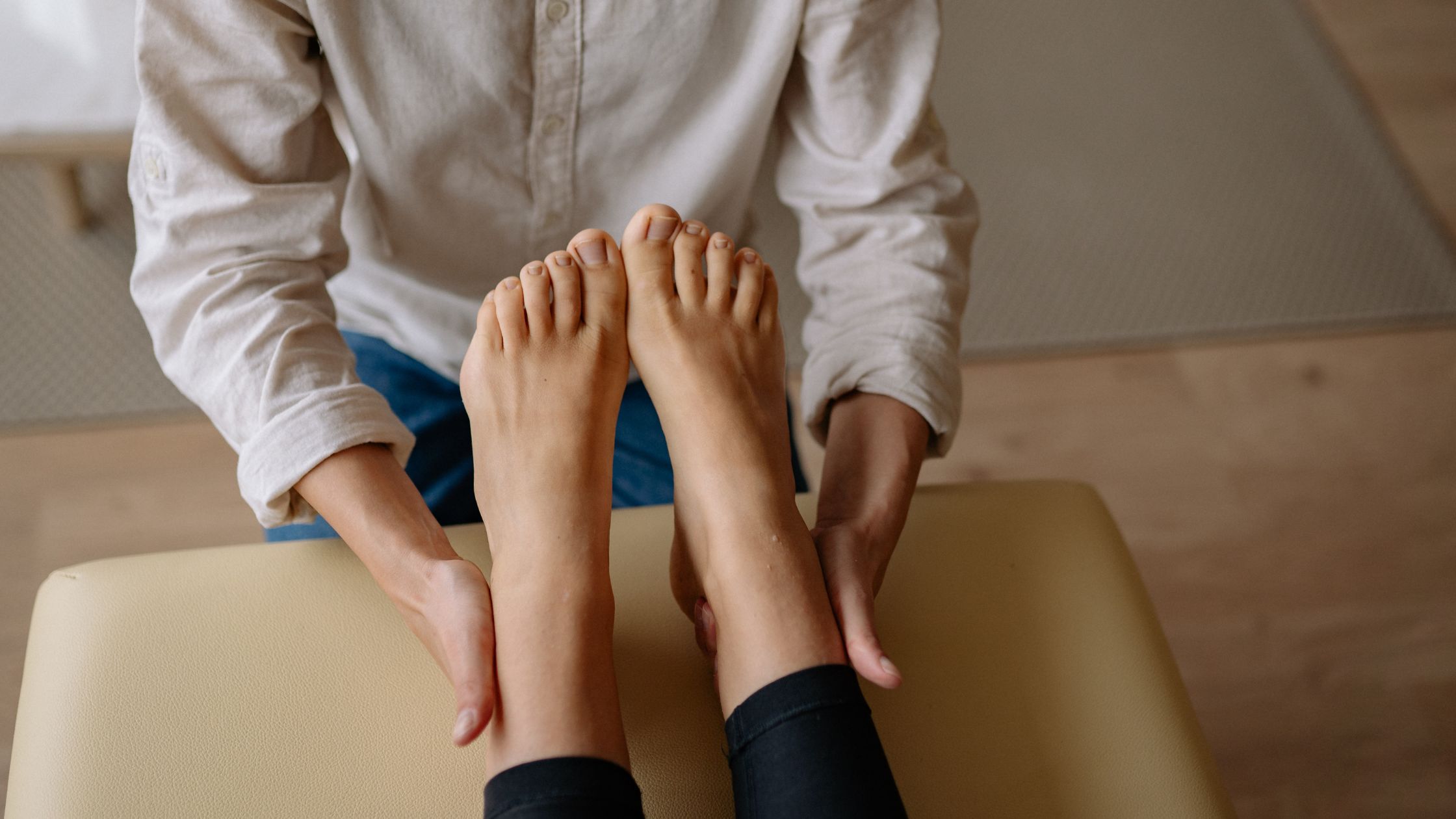
When the foot overpronates, the tibia, which is the main bone of the lower leg, rotates inward with it. That rotation is transmitted directly to the knee joint, placing stress on the inner aspect of the knee and increasing the load on structures like the medial meniscus. Over time this contributes to the kind of joint pain and wear patterns that accelerate cartilage breakdown in ways that have nothing to do with age or impact and everything to do with mechanics.
Similarly, when the foot mechanics are off, the hip and pelvis have to work harder to maintain balance and forward momentum. This can manifest as hip flexor tightness, gluteal weakness, and in some cases a contribution to back and spine pain that no amount of stretching seems to resolve, because the root cause is further down the chain.
Footwear in Dubai and Why It Matters More Than People Think
Dubai’s indoor culture creates some specific foot-related challenges. Polished marble floors, which are standard in malls, offices, and homes across the city, offer almost no traction and very little give underfoot. Spending hours walking on these surfaces in flat sandals or unsupportive shoes places sustained stress on the plantar fascia and the small stabilizing muscles of the foot.
The prevalence of flip-flops and fashion footwear in a city where walking outside is limited for much of the year means that many residents are spending most of their ground contact time in shoes that offer minimal structural support. For someone with a neutral foot type and strong supporting musculature, this may be manageable. For someone with a pronounced flat foot or high arch, it quietly accelerates the mechanical stress that eventually surfaces as pain.
This does not mean everyone needs to wear orthotics or clinical footwear. But it does mean that footwear choices deserve more conscious attention than most people give them, particularly for those who are already dealing with recurring lower limb discomfort.
What Can Actually Be Done
The reassuring reality is that most foot-related orthopedic issues are very manageable once they are properly identified. The starting point is always a thorough assessment of how the foot loads, how the ankle moves, and how those mechanics are influencing the joints above.
Custom orthotics, which are insoles shaped precisely to the individual foot, can make a significant difference for both flat feet and high arches by redistributing load more evenly and reducing the compensatory patterns that drive pain elsewhere. They are not a cure for everything, but for the right patient they can be genuinely transformative.
Rehabilitation and physiotherapy that targets foot and ankle strength is equally important. The muscles that support the arch and control how the ankle moves are trainable, and building their capacity reduces dependence on passive support over time.
For cases involving structural problems in the foot itself, our experienced orthopedic consultants can advise on everything from conservative management to foot and ankle surgery when that is the most appropriate path forward.
Start From the Ground Up
There is an old clinical saying that is worth taking literally: assess the foundation before you treat the structure above it. If you have been dealing with knee pain, hip stiffness, or recurring back trouble that has not responded well to treatment, and nobody has yet looked carefully at your feet, it may be time to change that.
Our orthopedic specialists at Westminster Multispecialty Clinic in Dubai Healthcare City take exactly this kind of whole-body approach to musculoskeletal care. Sometimes the answer to a problem that has been bothering you for years is sitting right there at ground level.
Schedule an appointment with our team and let us take a look at the full picture, from the ground up.