

The airport drop-off is the worst part. You park, you help with the bags, you say everything you need to say in the minutes before the departure gate swallows them up. Then you drive back on Sheikh Zayed Road alone, and the city feels different. Bigger, somehow. Quieter in a way that has nothing to do with noise.
For many people living in Dubai, this is the beginning of summer. Not the heat, not the school holidays, not the out-of-office replies piling up. It is the moment the family leaves and you stay behind. The moment the apartment goes from full to very, very still.

When staying behind becomes something heavier
Most people who go through this frame it practically. Someone has to keep the job running. Flights are expensive for the whole family. The kids do better spending summer near grandparents. All of that is true. None of it addresses what actually happens in the weeks that follow.
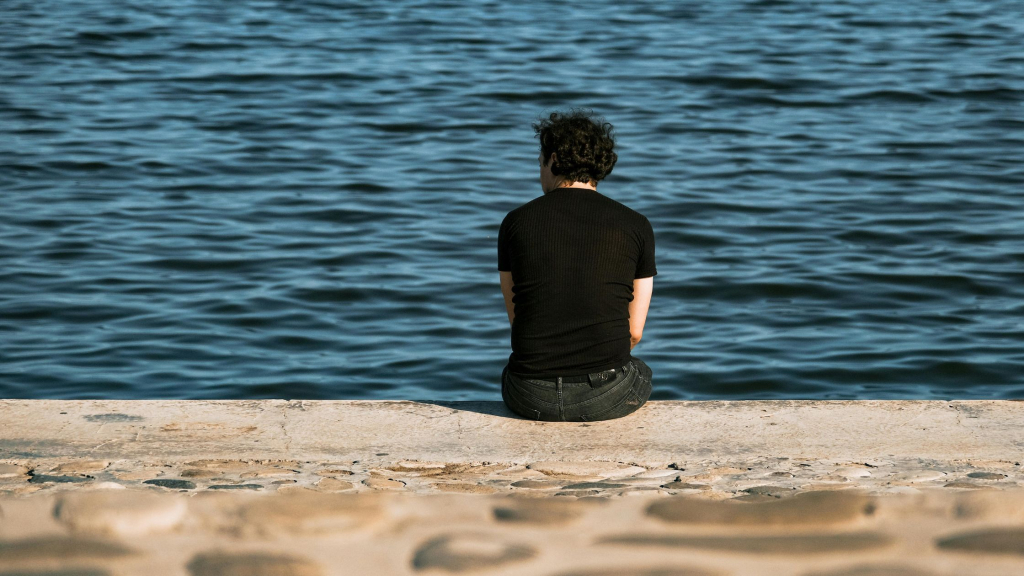
There is a particular quality to summer loneliness in Dubai that is hard to describe to someone who has not felt it. The city empties out visibly. Restaurants are quieter. The group chats go silent as everyone posts photos from somewhere else. Your usual colleagues are on leave. The friends you would call for a coffee are in Europe or South Asia or back home wherever home is. And you are here, doing the thing you came here to do, in a city that suddenly feels less like a place you chose and more like a place you are stuck.
This is not depression in the clinical sense, not for everyone. But it sits close enough to deserve attention. The combination of physical isolation, the absence of your closest people, disrupted routine, and forty-five degrees outside is a particular kind of pressure. Psychiatrists who work with expat populations know it well. It surfaces in the clinic every June and July with a kind of regularity that says something about how common, and how unspoken, this experience really is.
What loneliness does to the body and mind
Loneliness is not just a feeling. It changes things physiologically. Sleep becomes lighter or harder to come by. Appetite shifts. Some people eat less because cooking for one feels pointless. Others find themselves eating more, or drinking more, filling the evenings with something. Concentration at work dips in ways that are hard to trace back to a cause because the cause does not feel dramatic enough to name.
There is something particular about the loneliness of someone who is, on paper, fine. You have a job, you have a home, you have people who love you who are simply elsewhere right now. That makes it harder to talk about. Saying “I am struggling” feels like an overstatement when you compare yourself to someone in genuine crisis. So people say nothing. They get through the summer. They collect their family from the airport in September and feel immediately better and never quite examine what the two and a half months in the middle actually cost them.
Signs that the solo summer is affecting mental health more than you might want to admit:
- Sleep that feels unrefreshing even after eight hours, or nights where you cannot fall asleep before two in the morning
- A flatness about things you would normally look forward to, work wins that do not register, weekends that feel like something to survive rather than enjoy
- More time spent on your phone than you want, scrolling without purpose, looking for something to fill the gap
- Irritability that comes out of nowhere, usually at small things, because the larger thing is too diffuse to be angry at
- Withdrawing from the few people who are still around, skipping the social invitations that remain, because being with others while feeling this alone somehow makes it worse
None of these are catastrophic on their own. Together, and stretched over weeks, they wear something down.
The expat condition, and why summer makes it visible
There is a version of expat life that looks very good from the outside. The career is moving. The apartment is modern. The salary covers things that would not be possible back home. In return, you live at a distance from almost everyone who knew you before you were whoever you are now. You built a life here, yes, but the architecture of that life can be thin in ways that only become visible when the usual distractions are stripped away.
Summer strips them away.
The professional identity that normally carries a lot of weight, the busy schedule, the sense of purpose that comes from being needed at work, none of that fills an evening when the apartment is quiet and the video calls with the family are over and there are still four hours before sleep. What is left is the question underneath the question: is this the life I actually want, and do I have the relationships here that would hold me if something went wrong?
Some people find that question clarifying. Others find it frightening. Both reactions are worth paying attention to.
The stress and burnout that accumulates quietly through months of overwork and social thinness tends to surface exactly here, in the summer stillness, when there is finally enough silence to hear it. Dubai Healthcare City has a concentration of mental health services that many residents simply do not know exists. The assumption that psychiatric care is for crisis, for breakdown, for the moment things fall apart, stops people from going earlier. The solo summer, the quiet apartment, the flatness that creeps in by week three, these are legitimate reasons to speak to someone. They do not need to escalate into something worse to deserve attention.
What actually helps, and what does not
The advice that circulates on this topic is not always useful. Stay busy. Sign up for a gym class. Make plans. Some of it helps some of the time. The problem is that busyness is often what people use to avoid feeling the thing they are feeling, and eventually it stops working.
What tends to help more is something less prescriptive. Acknowledging that this is hard without immediately trying to fix it. Telling one person, actually telling them, not posting a vague caption on Instagram but saying to a specific human being: I am finding this summer difficult. The relief that comes from that single act of honesty is disproportionate to how small it sounds.
Routine matters more than stimulation. Not a packed schedule but a dependable one. Something that gives the day shape when the family is not there to do it naturally.
Sleep disorders are one of the earliest signs that the body is registering what the mind is trying to manage quietly. If the nights have become difficult, that is worth naming as a symptom rather than a minor inconvenience.
And for some people, the solo summer is when it becomes clear that the mental health support they have been putting off deserves a proper conversation. Not because they are in crisis, but because they have been quietly carrying something for long enough.
Things worth considering if you are spending this summer alone in Dubai:
- Let the people who are away know you are finding it hard. Not to worry them, but because saying it out loud changes something
- Be honest with yourself about whether you are filling the time or actually living in it
- Notice if the flatness is still there in week six or seven, because that is not just adjustment, that is something to address
- Look at what specialist support looks like before you need it urgently, because that is when people are least able to seek it well
- Consider whether the solo summer has surfaced something larger about what you need from your life here, because sometimes the discomfort is information.
The call back to yourself
There is a version of this summer where you white-knuckle through it. Where you count the weeks until September, stay functional, and let the reunion with your family reset everything. A lot of people do exactly that. It works, in the sense that they survive it.
There is another version where the quiet is used differently. Where the absence of the usual noise makes space for something honest. Where the question the summer is asking, about what you need, about what is missing, about what you have been too busy to feel, gets an actual answer instead of a postponement.
That version requires help sometimes. Not crisis intervention, not anything dramatic. Sometimes it is just a conversation with someone trained to hold these things carefully, at a clinic that understands what expat life in this city actually asks of people.
If the summer has already started to feel heavier than you expected, our psychiatry specialists at Westminster Multispecialty Clinic in Dubai Healthcare City are here to help. Reaching out is not an admission that you have failed at being resilient. It is what resilience actually looks like when you are paying attention. You can get in touch whenever you are ready.