

The cast goes on and the first days are loud. Messages arrive from three countries, a cousin drives in from Sharjah with food nobody asked for, and the family group chat has an opinion about every step. By week three the phone has gone quiet. The cast has turned gray at the edges, the shower takes a plastic bag and fifteen minutes, and at some hour after midnight the fall plays again from the beginning, the wet tile or the loose step or the curve on the Al Qudra track, always ending half a second too late.
The Quiet Starts Around Week Three
The hardest stretch of a fracture arrives after the day it happens. The day itself has adrenaline, staff, and a plan. What follows is mostly waiting, with independence reduced and a mind that suddenly has time. A meta-analysis of 27 studies and 7,109 patients pooled the numbers after acute orthopedic injury and found depression in 32.6 percent and post-traumatic stress in 26.6 percent. Nearly one in three people, and more than one in four, after a broken limb and nothing else. Those are pooled figures from studies that measured at different times and in different ways, so they describe how common distress is, not how any one person will feel.

At home it is rarely dramatic. Sleep that will not hold. Irritability toward the people who are only helping. A flinch at wet floors, a long pause at the top of a staircase, a reluctance to be the one who carries the tray. Dubai sharpens some of this, because so many households here run without extended family nearby, and a recovery leans on a handful of people covering work, school runs, and the daily commute.
What the Bone Is Doing While the Mind Catches Up
The bone follows a schedule. It knits across weeks, and a clean X-ray is an honest answer to a narrow question. What the X-ray does not show is the stiffness in the joints above and below the break, the muscle that thinned under the cast, and the swelling that returns every afternoon. That is the work of physiotherapy, and it starts earlier than most people expect: gentle movement in the joints the cast leaves free, then supervised strengthening once the surgeon allows load. A physiotherapist also supplies what a surgeon’s schedule rarely can, a weekly person who notices progress and says so out loud.
Practical firsts matter more than they sound. A doctor clears driving, not the calendar, so the first return to Sheikh Zayed Road waits until braking, steering, and reacting feel automatic. In July, when the walk from the car park is an effort of its own, early weight-bearing practice often moves indoors, onto the corridors of an air-conditioned mall, once the physiotherapist has allowed it. Sport follows the same logic. A bone that has healed on an X-ray can still sit under weak muscle and a stiff joint, which is how a second fall begins, so a return to padel or cycling is a graded decision made with the physiotherapist.
The Fear That Outlasts the Cast
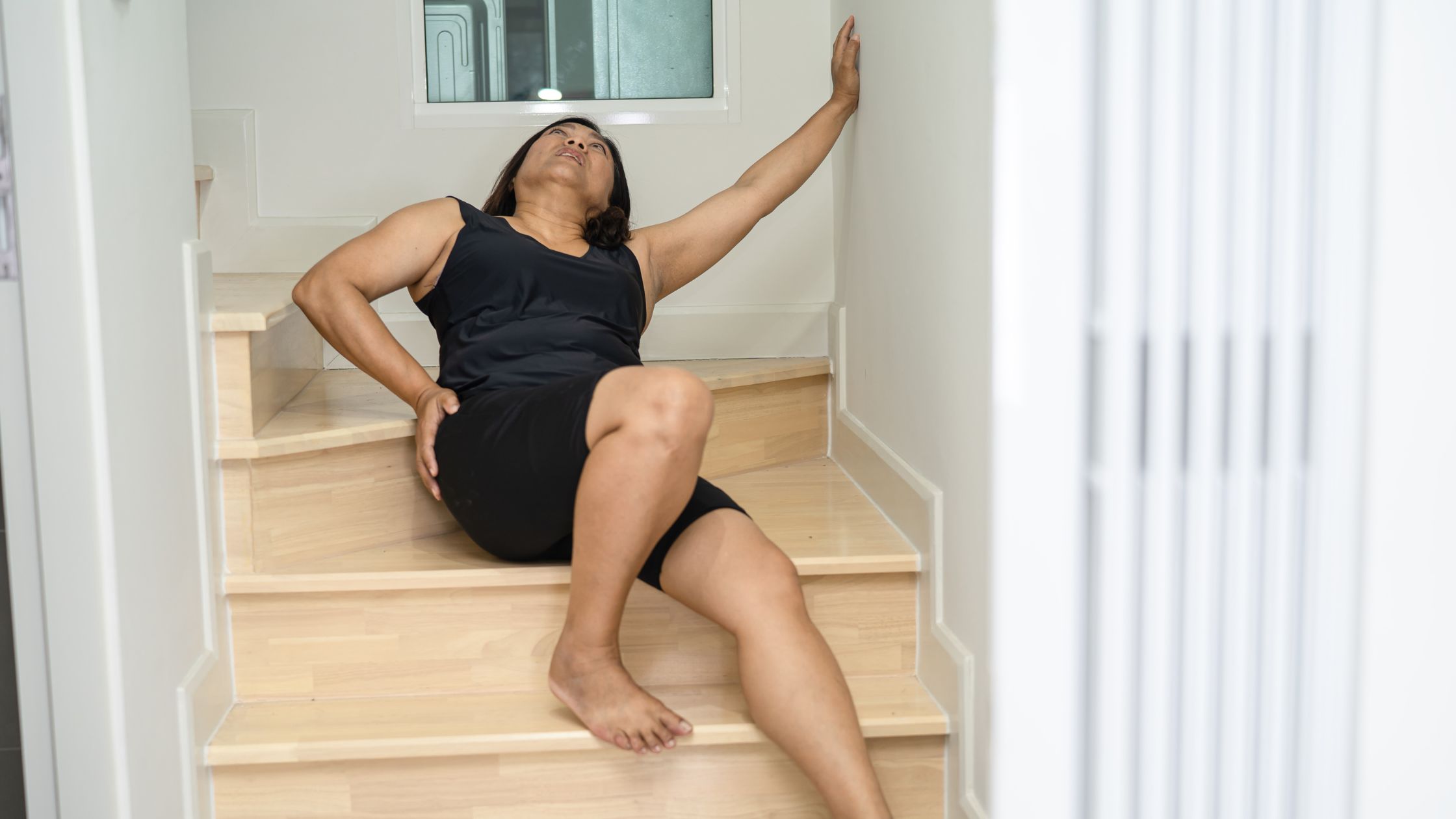
After a fall, the floor stops being neutral. A systematic review of fear of falling after hip fracture found prevalence ranging from 22.5 percent to 100 percent across studies, tending to fall as time passed and consistently tied to poorer physical function. It looked at hip fractures in older adults, but the experience it describes, a body that no longer trusts the ground, is not confined to them. The same review found too little evidence to say what reliably reduces the fear, which is a reason to raise it early instead of waiting for it to fade. Named fear can be built into the rehabilitation plan: supervised practice on stairs, on uneven ground, and on getting up from the floor, in small steps, with someone beside you.
The home deserves the same attention as the patient. Polished marble in a Dubai apartment is handsome and unforgiving when wet, bathroom tiles do not forgive socks, and a loose rug at a bedroom door is an old, ordinary cause of fractures. Fall prevention is mostly dull adjustments, a non-slip mat, a night light on the route to the bathroom, a rail where a hand naturally reaches, and they are easiest to arrange while the family is already rallying. A break from a simple fall also deserves a question about bone strength, since a fracture from standing height can be the first sign of osteoporosis.
Saying the Unspoken Part Out Loud
Most people mention the pain at appointments and keep the rest to themselves, because the rest feels like complaining about something that has an X-ray to prove it. The rest belongs in the room too. A surgeon or physiotherapist who knows that someone is hesitating on stairs, or waking at 3 a.m. with the fall on repeat, can change the plan: slower progression here, more supervised practice there, a suggestion to see a GP or psychologist when low mood or intrusive memories hang on for weeks. Persistent low mood is its own medical problem and deserves its own appointment, and it carries no verdict on character.
Families help most by asking about the second recovery as well as the first, and by resisting the urge to do everything. Carrying every bag and answering every call on someone’s behalf feels like kindness in week one and can quietly slow independence by week six.
A fracture heals in two places, and only one of them shows on an X-ray.
Our orthopedic specialists treat the break and keep an eye on the recovery around it at Westminster Multispecialty Clinic in Dubai Healthcare City, and it is fine to talk it through with us at any stage, including the part no scan records.