
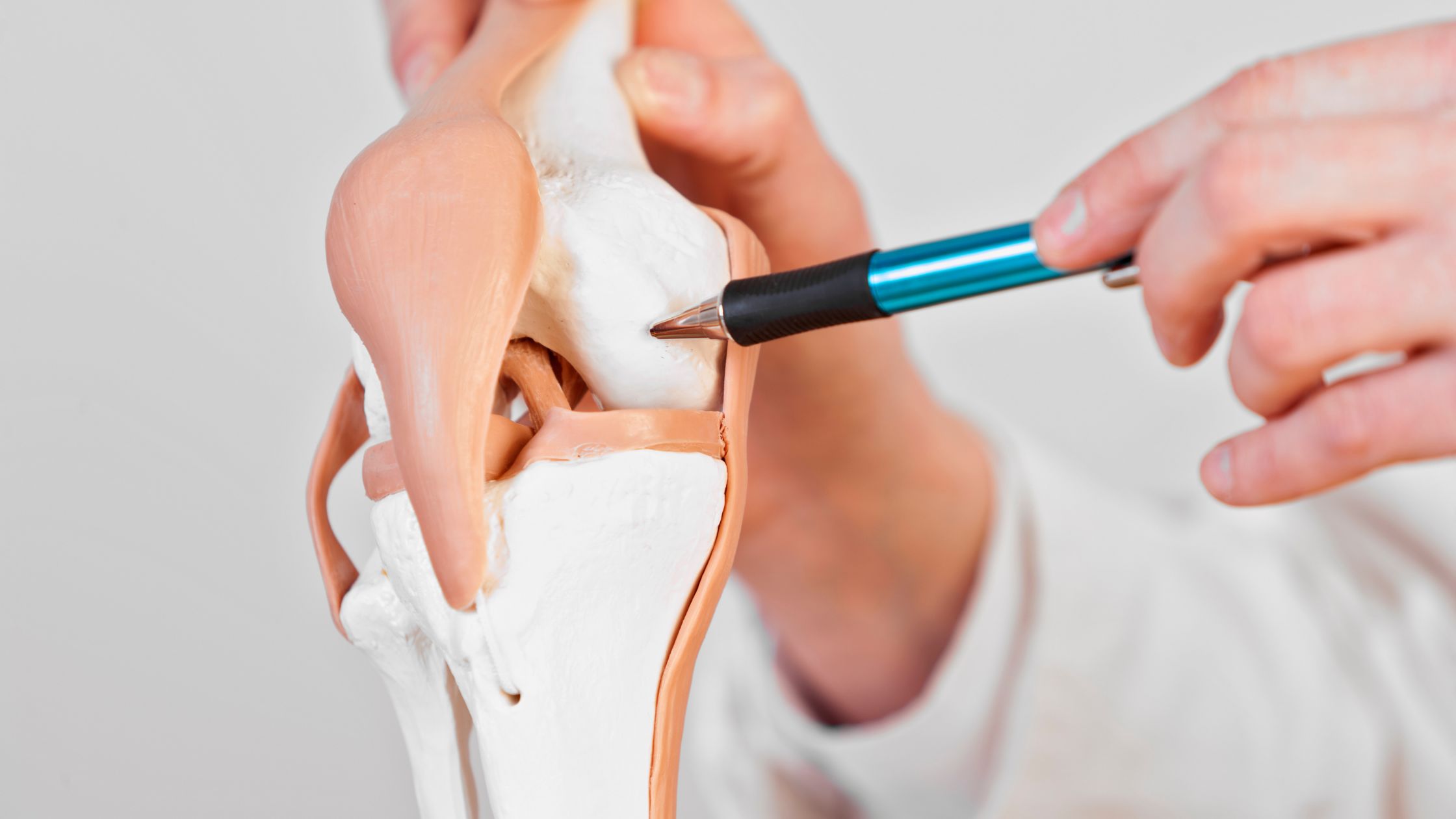
Most tissues in the body have a reliable feedback system. Damage a muscle and it tells you immediately. Strain a ligament and the signal is hard to miss. Cartilage is different. It has no nerve supply of its own, which means it can be wearing away for months or years before the surrounding structures begin to register a complaint. By the time a patient presents with joint pain that turns out to be cartilage-related, the damage is rarely new.
This is not a reason for alarm. It is a reason to understand what cartilage actually is, what threatens it, and what can be done when problems are found.
What cartilage does and why it is difficult to replace
Articular cartilage is the smooth, white tissue that covers the ends of bones inside a joint. Its job is to allow bones to move against each other without friction and to distribute load evenly across the joint surface. A healthy knee, for example, can absorb and redistribute forces several times body weight during activities like running or jumping without the bones ever making direct contact. Cartilage is what makes that possible.
The structural problem is its biology. Unlike most tissues, cartilage has no direct blood supply. It receives nutrients through diffusion from the synovial fluid surrounding it, a process that is slow and limited. This means that when cartilage is damaged, the body’s usual repair response, which depends on blood flow delivering cells to the injury site, simply does not happen in the same way. Cartilage does not heal the way a cut heals.
This is why early awareness matters. The window for conservative intervention is real and finite. Once cartilage loss reaches a certain threshold, the management options change significantly.

How cartilage gets damaged
There are two broad mechanisms, and they are not mutually exclusive.
The first is acute injury. A direct blow to a joint, a sudden twisting force, or the kind of impact that accompanies a significant sports injury can shear or fracture cartilage in a way that produces a focal defect, a specific area of damage within an otherwise intact joint. These injuries sometimes produce immediate symptoms but often do not, which is one reason they go undetected until imaging is done for an apparently unrelated complaint.
The second is gradual wear. Cartilage that is subjected to abnormal loading over time, whether from a structural issue like flat feet or a high arch, from weight, from muscle imbalance, or from years of repetitive stress, breaks down progressively. This is the mechanism behind osteoarthritis, which is not simply an inevitability of aging but a condition with identifiable contributing factors that can be addressed.
Both mechanisms can operate simultaneously. An old acute injury creates a focal defect that alters how load is distributed across the joint surface, which then accelerates wear in the surrounding tissue. This is why an ankle sprain that was “fine” ten years ago can become a source of persistent joint symptoms in middle age.
The joints most at risk in Dubai’s active population
The knee carries the highest cartilage burden of any joint in the body. It bears full body weight, operates through a wide range of motion, and is exposed to the rotational and impact forces of almost every sport Dubai residents play. ACL and meniscus injuries are closely connected to cartilage health because the meniscus acts as a secondary load distributor. When it is compromised, cartilage wear accelerates.
The hip is the second most commonly affected joint. Athletes who run long distances, cycle heavily on the Al Qudra trails, or play impact sports are loading hip cartilage under significant and repetitive force. Hip cartilage damage often presents as groin discomfort or a deep ache in the joint that is easy to attribute to muscle tightness until imaging clarifies what is actually happening.
The ankle deserves mention because it is consistently underestimated. People who have had multiple sprains, or a single significant one that was not properly rehabilitated, often develop osteochondral lesions, areas of cartilage and underlying bone damage that cause chronic ankle symptoms. These respond well to treatment when found early and become considerably more complex when they do not.
What can be done
The management of cartilage damage has changed considerably in the past decade. The options available now extend well beyond the traditional choice between living with symptoms and replacing the joint entirely.
For early to moderate cartilage wear, PRP injections use growth factors derived from the patient’s own blood to support the joint environment and reduce inflammation. The evidence for PRP in cartilage-related conditions has strengthened over time, and it remains one of the more useful tools in the conservative management range. Image-guided injection therapies allow precise delivery of treatment to the affected area, which matters when the target is a specific region of joint surface rather than a diffuse condition.
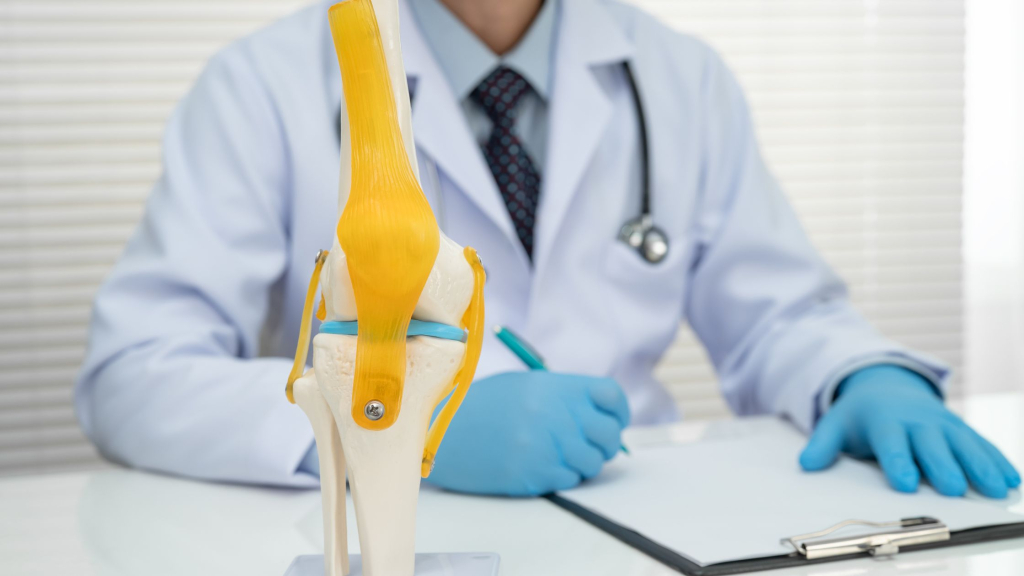
For focal cartilage defects, surgical options exist that aim to stimulate repair tissue or transplant healthy cartilage to the damaged area. These procedures, performed arthroscopically in many cases, are most effective when the surrounding cartilage is still largely intact. Which is another way of saying: earlier is better.
Rehabilitation and physiotherapy play a central role regardless of which treatment path is chosen. Strengthening the muscles around a joint reduces the load that cartilage has to bear. For the knee, quadriceps and hamstring strength directly influences how force is distributed across the joint surface during everyday movement. A well-structured rehabilitation program is not a consolation prize when surgery is avoided. It is a treatment in its own right.
The symptoms worth paying attention to
Because cartilage itself does not produce pain directly, the symptoms that point to cartilage involvement tend to come from the structures around it. Persistent joint swelling that returns after activity. A deep ache inside a joint rather than around it. Crepitus, the grinding or crunching sensation during movement, particularly in the knee. A joint that feels unreliable, that gives way slightly on uneven ground. Stiffness after sitting for long periods that takes several minutes of movement to clear.
None of these symptoms confirm cartilage damage on their own. But collectively, and particularly when they have been present for more than a few weeks, they are worth investigating.
The orthopedic team at Westminster Multispecialty Clinic in Dubai Healthcare City has the imaging and clinical expertise to identify cartilage problems at stages when the full range of treatment options is still available. That range narrows as damage progresses.
Cartilage does not announce itself. Most people who have lost significant amounts of it did not know until the joint around it began to fail. The useful question is not whether your joints hurt right now. It is whether they have been sending quieter signals that you have not yet acted on.
Get in touch with Westminster Multispecialty Clinic in Dubai Healthcare City.