
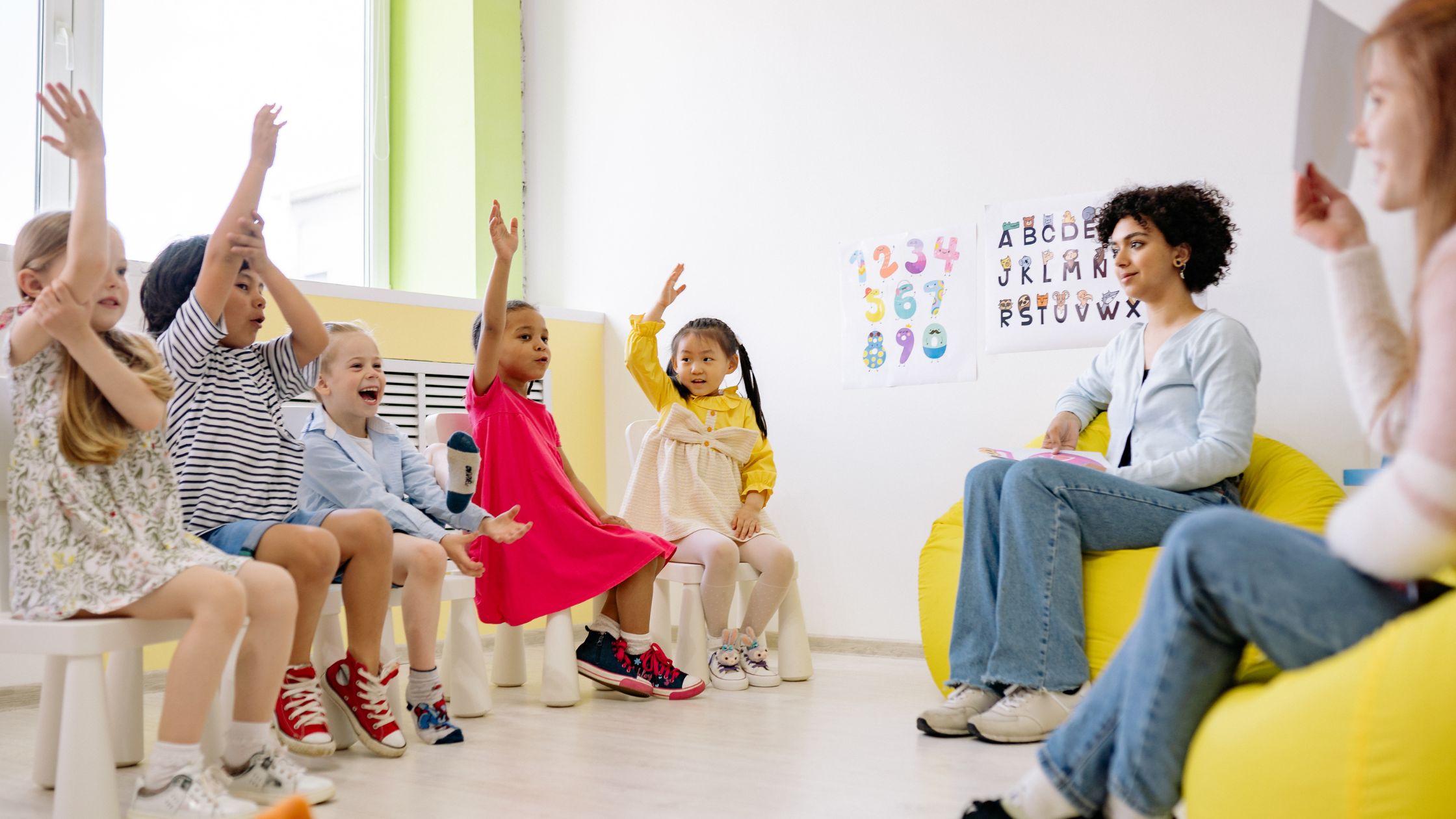
A child who grows up in Dubai grows up in several worlds at once. At school they sit beside classmates from twelve different countries. At home the language might be Arabic, English, Hindi, Tagalog, or some combination that belongs only to that family. The festivals they celebrate, the food on the table, the expectations around them, these often pull in directions that do not fully align. And they are supposed to make sense of all of it, quietly, while also learning to read and managing the social complexity of the playground.
Nobody tells them this is remarkable. It is just their life.

But the emotional demands of growing up across cultures are real, and they shape children in ways that parents do not always recognise until something surfaces. A child who cannot name what they are feeling. A teenager who is one person at home and someone else entirely at school. A young adult who realises, somewhere in their twenties, that they never quite knew which version of themselves was the real one.
Emotional intelligence does not develop automatically. It is built, slowly, through specific kinds of experience and specific kinds of conversation.
What emotional intelligence actually means in a child
The term gets used loosely. Broadly, it refers to a child’s ability to recognise what they are feeling, to manage that feeling well enough to act rather than just react, to understand that other people have feelings that are separate from their own, and to use all of this in their relationships.
None of this is innate. Some children have more natural temperamental ease with emotions than others, but the skills themselves, the vocabulary, the regulation, the empathy, are learned. They are learned primarily from the adults around them and from the quality of the emotional environment those adults create.
In a multicultural setting, this process has layers that more homogenous environments do not. Children in Dubai are managing not just their own emotional world but the translation work of moving between cultural codes that have different rules about what emotions mean, which ones are acceptable to express, and how.
The particular position of expat children
Children who have moved countries, or who have grown up watching parents manage the specific stresses of expat life, carry something that deserves acknowledgment. They have often shown more adaptability than adults give them credit for. They have also absorbed more than adults realise.
A parent managing the pressure of being far from their own support network, building a career in a competitive city, sending money home, performing stability for their children, is communicating something to those children even when they say nothing. Children are extraordinarily accurate readers of adult emotional states. They pick up the tension. They often decide, without being told to, that they should not add to it.
The child who seems fine, who does not ask for much, who is described as easy, is sometimes a child who has learned to manage their own distress privately because the adults around them seem too burdened to hold any more.
This is not blame. It is a pattern worth knowing about.

What the research says, and what it does not
Studies in child development are fairly consistent on a few points. Children who grow up with adults who name emotions, who talk about feelings as normal and variable rather than as problems to be suppressed, develop better emotional regulation over time. Children who experience their distress as something an adult can tolerate and respond to, rather than something that frightens or overwhelms the adults around them, learn that their inner world is manageable.
What the research does not fully capture is the specific experience of children growing up between cultures, where the emotional norms of home and the emotional norms of school may be genuinely in conflict. Where expressing sadness is valued in one context and read as weakness in another. Where anger has different permissions depending on which room you are standing in.
These children are doing complicated work. They need adults who understand that the work is complicated.
When to be concerned
Most children move through emotional difficulty without it becoming something that requires professional support. But some signals are worth taking seriously:
- Persistent withdrawal from friends or activities that previously interested them
- Sleep disturbances that last more than a few weeks without an obvious cause
- Physical complaints, stomach aches, headaches, that have no medical explanation and cluster around particular situations like school mornings
- Sudden changes in behaviour or mood that do not resolve with time
- Expressions of hopelessness, worthlessness, or statements that suggest a child feels they are a burden
These are not always signs of something serious. But they are signs that a child is carrying something they cannot process alone, and that adult support, possibly professional support, would help.
Our child and adolescent psychiatry team at Westminster Multispecialty Clinic works with children and families across exactly these situations. The work is always age-appropriate, always involves parents as partners, and begins with listening to the full picture before drawing any conclusions.
What parents can do, starting now
The most consistent finding in child emotional development research is that parental emotional availability matters more than almost any intervention or programme. A parent who can sit with a child’s difficult feeling, without rushing to fix it or minimise it, is doing something significant.
This sounds simple. It is not always easy, particularly when a parent is also managing their own stress, their own adjustment to life in a new country, their own unaddressed emotional weight. Parents who are struggling themselves find it harder to be emotionally available to their children. This is not a moral failure. It is how it works.
Supporting a child’s emotional development sometimes begins with a parent attending to their own mental health. A parent who has processed their own anxiety or burnout has more to give. A parent who has language for their own emotional experience is better placed to give their child that language too.
Building the kind of home a child can be honest in
Emotional intelligence is not a skill that children develop in workshops or through books, though these things can help. It develops in the small, repeated moments of daily life: the dinner table conversation where a feeling is named rather than dismissed, the bedtime exchange where a child is asked not just how their day was but what was the hardest part, the argument that is repaired rather than papered over.
Dubai is a city that asks a great deal of its adult residents. It is worth asking, occasionally, what it is asking of the children who are growing up inside it, and whether those children have the support they need to meet those demands without losing something of themselves in the process.
If you have questions about your child’s emotional wellbeing, or want to speak with someone about what you are observing, the team at Westminster Multispecialty Clinic is available through our contact page or directly on WhatsApp at https://wa.me/971552677405.