
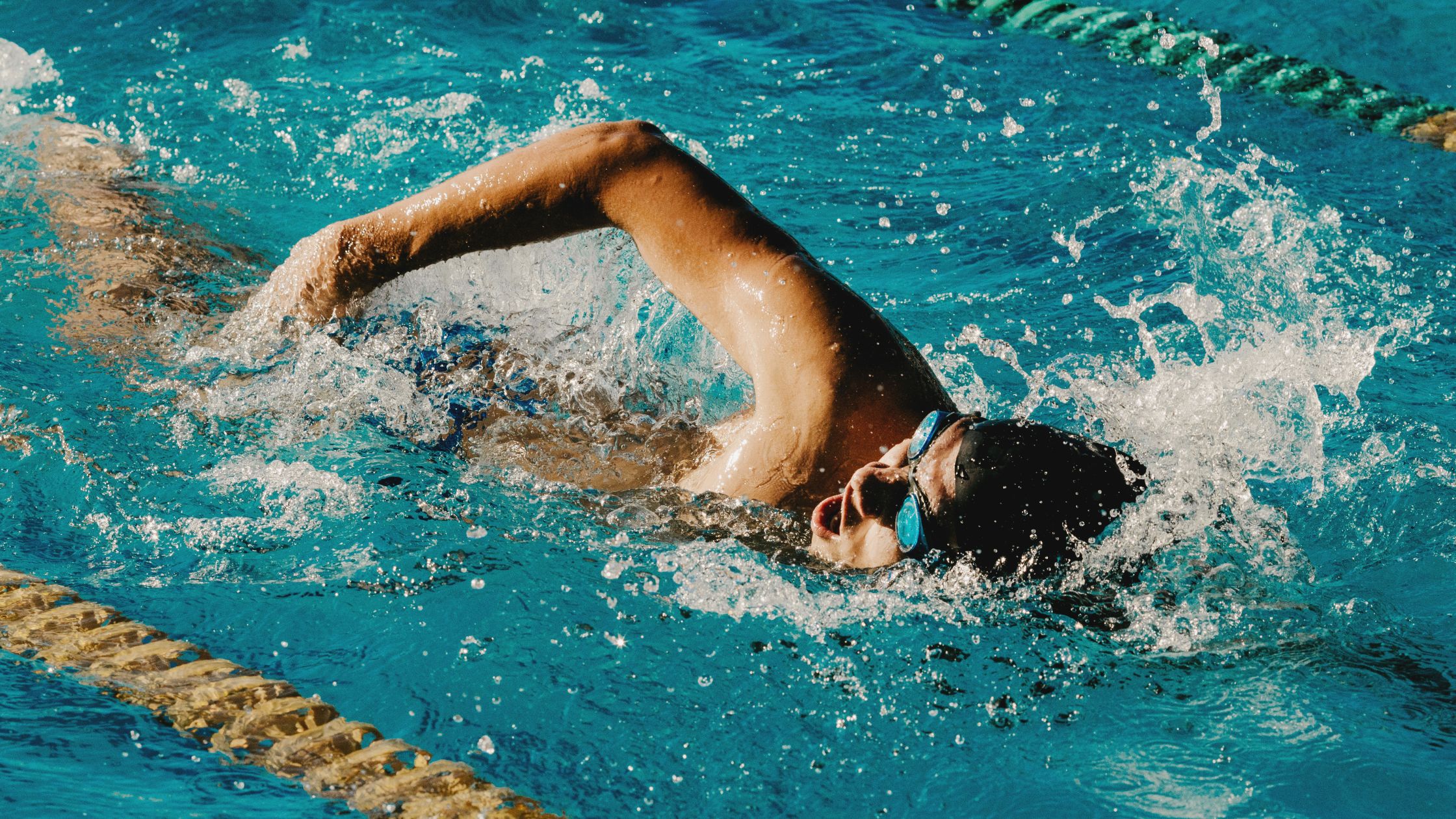
When the temperature outside makes any other form of exercise impractical, swimming becomes the obvious answer. Dubai has no shortage of pools, whether in residential buildings, hotels, or fitness clubs, and the sport has a well-earned reputation as a low-impact way to stay fit. People with joint pain swim. People recovering from injuries swim. People who simply want a full-body workout without the heat swim.
What gets less attention is that swimming has its own injury profile. Done frequently and without attention to technique or load, it places repetitive stress on specific parts of the body, and those stresses accumulate.

Why swimming injuries are easy to miss
Most sports injuries have an obvious moment of onset. A twisted ankle, a fall, a collision. Swimming injuries tend to arrive differently. There is no single incident. Instead, there is a shoulder that starts to ache after longer sessions, a neck that feels stiff by the end of the week, or a knee that begins to complain during breaststroke. Because the pain builds gradually and swimming is widely considered gentle, people often continue training through early warning signs far longer than they would with a running injury or a gym strain.
By the time the discomfort is significant enough to prompt a rest, the underlying issue is usually well established.
The most common swimming injuries
Swimmer’s shoulder
This is the most frequently seen swimming-related injury, and it covers a range of conditions affecting the tendons, muscles, and structures around the shoulder joint. Freestyle and butterfly place the highest demand on the shoulder, requiring the rotator cuff to work hard through thousands of repetitions per session. When technique is poor, when training volume increases too quickly, or when the shoulder muscles are fatigued, the tendons that stabilise the joint become overloaded.
The result is pain that starts during or after swimming, often felt at the front or side of the shoulder. Left unaddressed, it tends to worsen and can develop into a more significant rotator cuff problem. Our shoulder pain physiotherapy page covers how these presentations are assessed and treated.
Neck pain from poor breathing technique
In freestyle swimming, the head rotation required to breathe puts the cervical spine through a repetitive movement pattern. When that rotation is excessive, one-sided, or driven by tension in the neck rather than proper body roll, it loads the cervical joints and surrounding muscles in ways they were not designed to sustain over long distances.
Swimmers who breathe predominantly to one side, or who lift rather than rotate the head to breathe, are particularly prone to this. The pain typically presents as stiffness and soreness in the neck and upper trapezius, which can extend into the shoulders and upper back. Our neck pain physiotherapy page explains the mechanisms and what treatment involves.
Breaststroker’s knee
The breaststroke kick places an outward rotational force on the knee that other strokes do not. Over time, particularly when training volume is high, this can irritate the medial structures of the knee, including the ligaments on the inner side. The pain is usually felt on the inside of the knee and tends to worsen as sessions get longer.
Swimmers who favour breaststroke as their primary stroke, and those who have recently increased their distance, are most likely to develop this pattern of discomfort.
Lower back pain
Butterfly and breaststroke both involve significant spinal extension and undulation. For swimmers who lack core stability or who have existing tightness in the hip flexors, this movement places considerable load on the lumbar spine. Lower back pain in swimmers is less common than shoulder problems but is more likely to persist if the underlying mechanics are not addressed.
What drives most swimming injuries
Looking across these different injury types, a few common factors appear repeatedly:
- Increasing training distance or frequency too quickly, particularly at the start of summer when pool use picks up
- Poor technique, especially in shoulder rotation, head position, and breathing mechanics
- Insufficient rest between sessions, which prevents soft tissue from recovering between loads
- Muscle imbalances, particularly weak rotator cuff muscles or poor core stability, that place excess demand on other structures
- Training through early discomfort rather than modifying before an injury becomes established

How physiotherapy helps swimmers
Physiotherapy for swimming injuries addresses both the symptom and the cause. A shoulder that is painful because of rotator cuff overload needs treatment for the tendon, but it also needs correction of the movement pattern that produced the overload in the first place. Otherwise, the same injury returns within weeks of resuming training.
Our physiotherapy specialists at Westminster Clinic, Dubai Healthcare City, carry out a full assessment that looks at strength, mobility, and movement patterns, not just the site of pain. For tendon-related issues, our tendonitis and tendon injury therapy service provides targeted treatment to support recovery and reduce the risk of recurrence. You can find out more about the full range of conditions we treat on our Physiotherapy Services page.
Staying in the water through summer
Swimming is worth protecting as a habit. For many people in Dubai it is the most sustainable form of exercise through the hotter months, and the benefits, cardiovascular fitness, muscular endurance, joint mobility, are real. The goal is to train in a way that keeps those benefits accumulating rather than being interrupted by an injury that could have been addressed earlier.
Swim well, stay pain-free
If you are dealing with shoulder discomfort, neck stiffness, or knee pain that has developed through swimming, our team can help identify what is driving it and get you back in the water. Contact us to arrange a consultation with our physiotherapy specialists at Westminster Clinic, Dubai Healthcare City.