

Every September, physiotherapy clinics across Dubai see the same pattern repeat. School terms restart, offices fill back up, gym schedules resume, and within two or three weeks the back and hip complaints start arriving in noticeably higher numbers.
Nothing new has usually happened to these patients. No fall, no lifting injury, no sudden twist. What changed is the pace of their week, and the back and hip are usually the first places that show it.
The gap between summer and September asks a lot of the spine
Summer in Dubai tends to slow people down. The heat pushes activity indoors, holidays interrupt routine, and even regular gym-goers often train less between June and August. None of that causes a problem on its own.

The trouble starts when routine snaps back all at once in September. Long commutes down Sheikh Zayed Road resume, back-to-back meetings return, and school runs and pickup lines outside schools in Downtown Dubai and Business Bay become a daily fixture again. The spine and hips are asked to handle a workload they have not carried in weeks.
Muscles and joints adapt to whatever load they are given regularly. Reduce that load for a stretch of time and the supporting muscles around the lower back and hip lose some of their capacity. Not enough to notice while things stay quiet, but enough to matter the moment demand increases again.
That mismatch, between what the body is used to and what it is suddenly being asked to do, is what produces the September flare far more often than any single incident.
What is actually happening in the back and hip
The lower back and hip share nerve pathways and several connecting muscle groups, which is why pain in one area often shows up as pain in the other. Prolonged sitting shortens the hip flexors, the muscles running from the front of the hip to the lower spine.
Tight hip flexors pull on the pelvis in a way that increases pressure on the lumbar facet joints, the small joints at the back of each spinal segment. At the same time, the sacroiliac joint, where the base of the spine meets the pelvis, can become irritated by the sudden return to long periods of sitting followed by standing and walking, a pattern that barely existed during the quieter summer weeks.
This is a widespread issue regionally, not an isolated one. A 2024 study of healthcare workers across Dubai, Ajman, and Sharjah found that 89.6 percent reported some form of musculoskeletal disorder, with the lower back among the three most commonly affected areas, according to research published in ScienceDirect.
The study focused on healthcare staff specifically. But the underlying pattern, prolonged sitting and standing combined with sudden shifts in activity, applies just as strongly to office workers, parents managing school routines, and anyone whose summer pace looked very different from their September one.
None of this means the pain is imagined or exaggerated. The tissue changes are real, even if they are gradual and reversible. A hip flexor that has shortened over eight or ten weeks does not lengthen back to its previous range simply because the calendar has turned to September.
A sacroiliac joint that has grown sensitised to sudden load changes needs more than a few days off to settle.
Patterns we see this time of year
A few situations come up repeatedly once schools and offices are back in session.
- Commutes that stretched to forty or fifty minutes again after a quieter summer, spent sitting in the same flexed position
- Parents standing for long stretches in school pickup lines after months without that specific demand on the hips and lower back
- A return to the gym at the same intensity as before the summer break, without easing back in
- Long days of back-to-back meetings with little movement between them
- Carrying school bags, groceries, or children more frequently than the body has done in weeks
None of these are unusual activities. They are just being reintroduced faster than the muscles supporting the spine and hip can adjust to.
When a flare is more than tight muscles
Most September back and hip pain settles with rest, movement, and time. Some signs suggest the pain deserves a proper assessment rather than waiting it out.
- Pain that radiates down the leg past the knee, particularly with tingling or numbness
- Pain that wakes someone up at night or is worse first thing in the morning
- Pain that has not started easing after five to seven days
- Weakness in the leg, or a leg that feels like it might give way
- Pain that is limiting walking distance or the ability to sit through a full workday
These patterns point toward something more specific than general deconditioning. They respond better to treatment the earlier they are addressed.
How physiotherapy addresses a flare like this
A physiotherapy assessment starts by working out which structure is actually driving the pain, the sacroiliac joint, a facet joint, tight hip flexors, or a combination. The treatment approach differs depending on the source.
Back pain physiotherapy at our Dubai Healthcare City clinic typically combines manual therapy to ease joint restriction with a graded exercise programme that rebuilds the capacity lost over the quieter summer months. That approach works better than jumping straight back to a previous activity level and risking another flare.
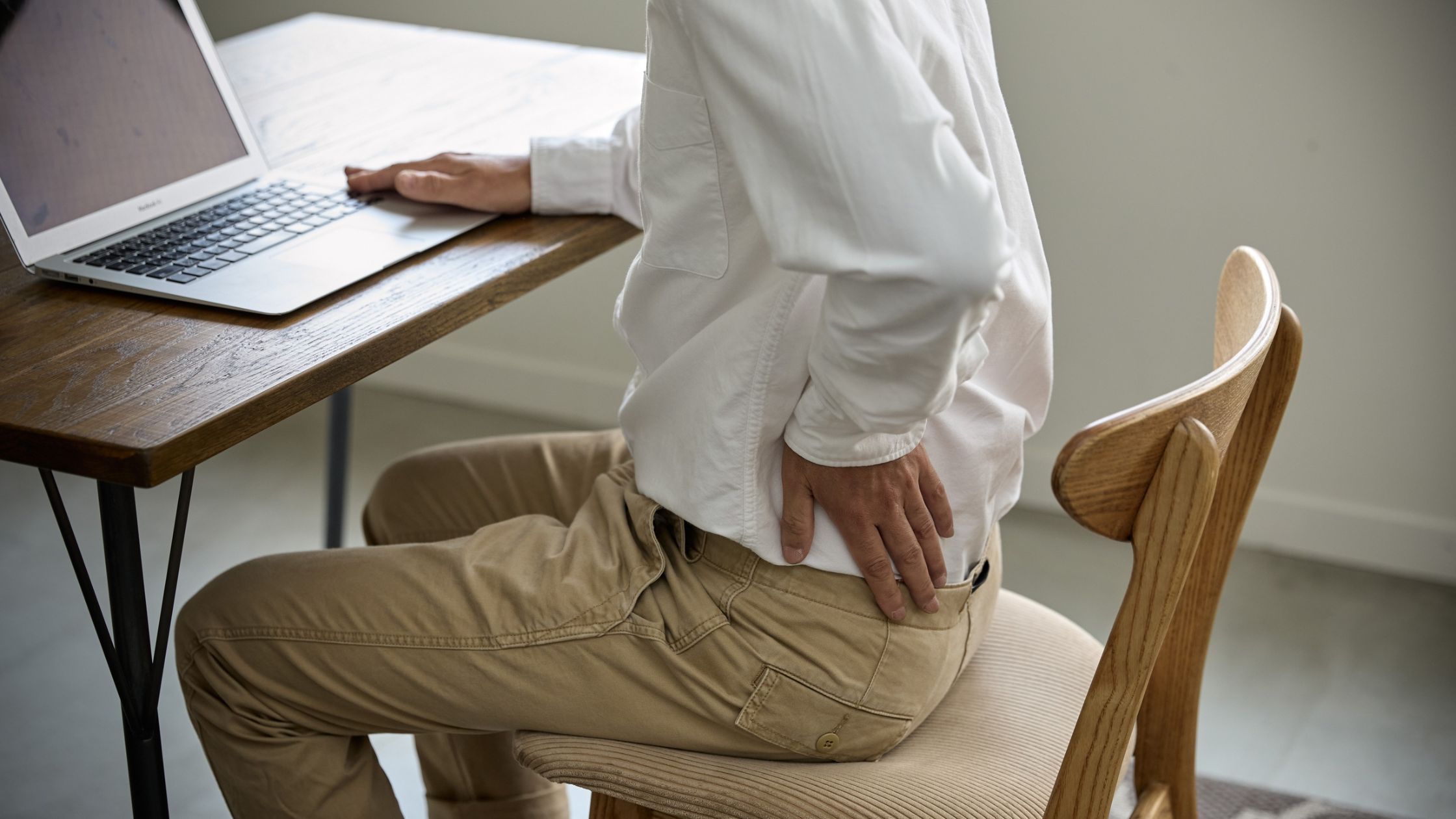
For pain that involves both the back and hip together, treatment through general musculoskeletal physiotherapy looks at the whole kinetic chain rather than treating each joint in isolation. A stiff hip and an irritated lower back often feed into each other, and addressing only one rarely resolves the pattern completely.
Getting ahead of the pattern instead of repeating it
The September flare tends to repeat itself each year for the same people, because the underlying deconditioning is never quite addressed before the next busy season arrives. Building back activity gradually, rather than resuming a full routine in the first week back, gives the muscles supporting the spine and hip time to catch up with demand instead of being overwhelmed by it.
For anyone dealing with back or hip pain that has returned along with the September routine, our physiotherapy specialists can identify what is driving it and build a plan suited to the specific joints and muscles involved. Getting in touch through our contact page is the first step toward treating the cause rather than managing the symptom every year it comes back.