

Walk into most gyms in Dubai between June and August and you will notice something. The car park is full. The treadmills are occupied. People who spent the cooler months exercising outdoors have migrated inside, and the gym has become the only viable option for staying active. For many, it also becomes the place where something goes wrong.
Summer is consistently one of the busier periods for physiotherapy consultations related to gym injuries in Dubai. The reasons are predictable once you understand what is actually happening in the body.
The fitness gap nobody accounts for
Outdoor exercise in Dubai from October through April is genuinely good. The evenings are cool enough for running, cycling, and sport. People build real fitness over those months. Then summer arrives, routines break down, and activity drops. Some people stop almost entirely for six to eight weeks.
When they return to the gym, the expectation is that the body will pick up where it left off. It rarely does. Cardiovascular fitness declines relatively quickly during a period of inactivity, and muscular strength and joint stability follow. The person lifting the same weights they were moving in March, or running at the same pace, is asking a body that has deconditioned to perform at a level it no longer supports.
That mismatch is where injuries begin.
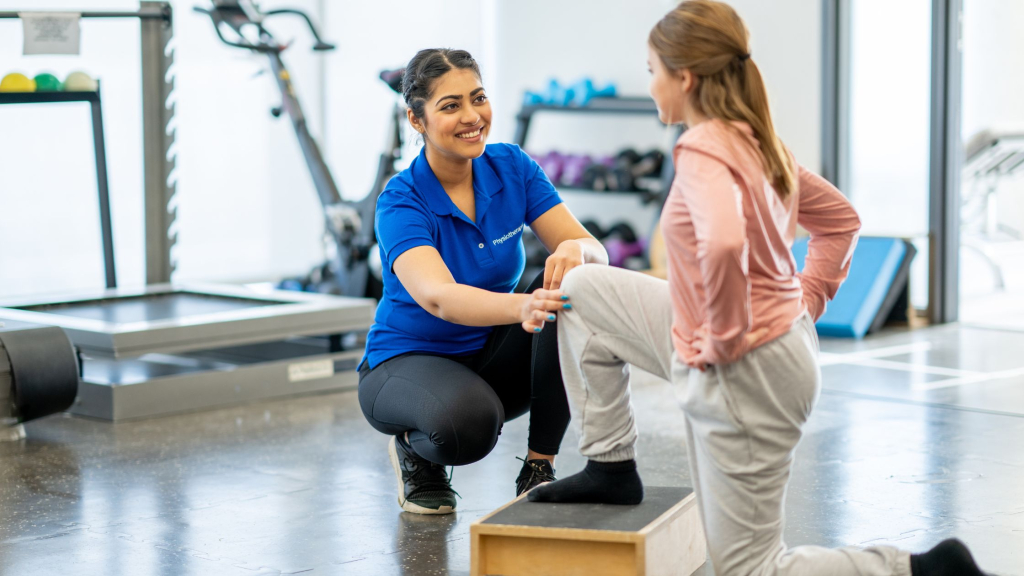
The most common gym injuries seen in summer
The injuries that follow this pattern tend to cluster around a few areas:
- Shoulder strains and rotator cuff problems — common in people who return to pressing and pulling movements without rebuilding shoulder stability first. The rotator cuff muscles are particularly vulnerable when the load is reintroduced too quickly after a break
- Lower back pain — deadlifts, squats, and weighted rows all place significant demand on the lumbar spine. When the supporting muscles have weakened, the spine absorbs force it shouldn’t
- Knee pain — running and leg training after a period of inactivity can irritate the tendons around the knee, particularly in people who increase volume or intensity too fast
- Tendon injuries — the Achilles, patellar tendon, and tendons around the elbow are all vulnerable to overload when training resumes too aggressively. Tendon tissue adapts more slowly than muscle, and it gives warning signs that are easy to dismiss until the injury is established
Each of these is treatable. Most of them are also avoidable with the right approach to returning to training. Our general musculoskeletal physiotherapy service covers assessment and treatment for the full range of gym-related injuries.
Why people push too hard
Part of the problem is psychological. After weeks of reduced activity, there is often a strong urge to make up for lost time. Sessions become longer. Weights go up quickly. Rest days feel like setbacks. The body is being asked to adapt at a pace that soft tissue, tendons, and joints simply cannot match.
Dubai’s gym culture also tends toward intensity. High-output classes, heavy lifting programmes, and competitive training environments are all popular, and they work well for people who have maintained consistent training. For someone returning after a break, the same environment can accelerate injury risk considerably.
What a safer return to training looks like
Returning to the gym after a break does not mean starting from scratch, but it does mean starting below where you left off. A few principles that make a real difference:
- Reduce weights by around 20 to 30 percent for the first two weeks and rebuild from there
- Prioritise mobility and activation work before loading the body heavily
- Increase training volume gradually, adding no more than ten percent per week
- Pay attention to how the body responds in the 24 to 48 hours after a session, not just during it
- Take rest days seriously, especially in the early weeks of returning
Soreness is normal. Sharp pain, joint swelling, or discomfort that persists beyond 48 hours is a signal worth acting on, not pushing through.
When physiotherapy makes the difference
Some injuries resolve quickly with rest and modification. Others do not, and the distinction matters. A shoulder that keeps aching through pressing movements, a knee that swells after leg sessions, or lower back pain that flares every time training resumes are all patterns that warrant proper assessment.
Our physiotherapy specialists at Westminster Clinic, Dubai Healthcare City, can identify what is driving the problem, distinguish between muscle soreness and structural injury, and design a rehabilitation plan that gets people back to training without repeating the same cycle. Our tendonitis and tendon injury therapy page covers one of the most common presentations, and our back pain physiotherapy page addresses the lower back specifically.

For anyone who has already picked up an injury, early treatment is the faster route back. Waiting to see if something settles on its own is sometimes the right call. Waiting for months while continuing to train through pain rarely is.
Getting the summer right
The gym is a good place to be in summer. It keeps people moving, maintains fitness, and provides structure when outdoor options are limited. The goal is to use it in a way that carries through to the cooler months intact, rather than arriving at October with an injury that sidelines training just when conditions improve.
Train smarter this summer
If you are dealing with a gym-related injury or want guidance on returning to training safely, our team is ready to help. Contact us to arrange a consultation with our physiotherapy specialists at Westminster Clinic, Dubai Healthcare City.