

A mother waiting at school pickup in Al Barsha watches her ten-year-old walk out with a backpack that looks like it belongs on a hiking trail, shoulders already curling forward under the weight, chin dropping toward a phone the second the bag hits the back seat. She has noticed this before. She has not done anything about it, because nothing looks urgent. That is exactly the problem.
Posture damage in children rarely looks dramatic while it is happening. It shows up slowly, in the space between one school year and the next, and by the time a parent in Dubai brings a child in for an assessment, the pattern has usually been building for a long while.
The Weight They’re Actually Carrying
Most school bags in Dubai are heavier than they should be, and most parents have never actually weighed one. A recent review of school bag research found that children carrying loads above the recommended range report back pain at a rate of 42 percent, and the widely cited guideline among physical therapists is that a bag should stay under 10 to 15 percent of a child’s body weight. For a 30-kilogram child, that is a ceiling of around 4 to 4.5 kilograms, well below what a laptop, a lunch box, water bottles, and a full set of textbooks typically weigh combined.

The mechanics matter here. A child’s spine is still developing its natural curves and its growth plates are still active, which means the same load that a fully grown adult could carry without consequence lands very differently on a nine-year-old’s frame. Carried incorrectly, on one shoulder or with straps too loose, the weight pulls the upper body forward and sideways, and the muscles around the spine compensate by tightening unevenly. Over months, that compensation becomes a habit the body defaults to even without the bag on.
- Two straps, worn correctly: Both shoulders bear the load evenly, with the bag sitting at hip level rather than sagging toward the lower back.
- Weekly clear-outs: Textbooks and folders that are not needed that day add up fast and rarely get removed once packed.
- Wheeled bags for younger children: A reasonable substitute where school policy allows it, particularly for children under nine.
None of these fixes cost anything, and together they remove most of the daily strain before it accumulates.
What Screens Are Doing to Growing Necks
A 2025 UAE-based study following children aged four to seventeen found that 37.7 percent spend more than seven hours a day on screens on a typical school day, a figure that climbs further during long weekends and school breaks when Dubai’s heat keeps families indoors more often. That much time with the head tilted forward and down, whether over a tablet at the kitchen table or a phone on the sofa, trains a posture pattern that pediatric physiotherapists sometimes call text neck, where the neck’s natural curve flattens and the muscles at the back of the shoulders lengthen and weaken while the chest muscles tighten and shorten, a pattern that overlaps with what we typically address through back and spine care in older patients who never had it corrected young.
Children do not usually complain about this the way adults complain about a stiff neck after a long flight. They adapt. A child who has spent years with rounded shoulders often does not know that shoulders are supposed to sit differently, because rounded is what feels normal to them. That is the part parents in Dubai tend to miss entirely, not because they are inattentive, but because a child rarely announces a posture problem in words a parent can act on.
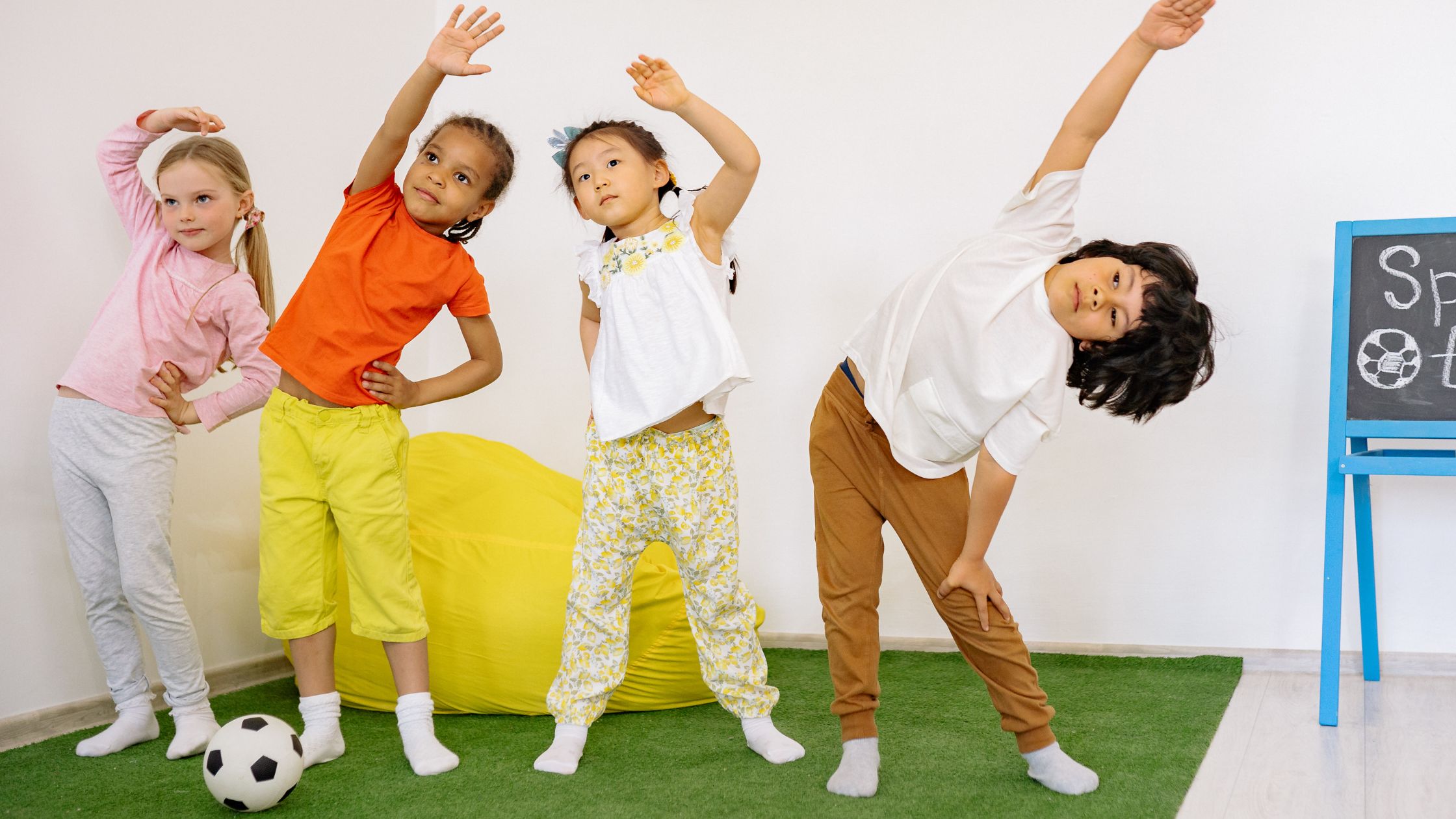
The habits that help are unglamorous. Screens at eye level rather than in the lap. Regular breaks every twenty to thirty minutes, even short ones. Time outdoors, whether that is a bike ride along Al Qudra or an evening at Safa Park, that gets a child’s arms overhead and spine extended in ways that screen time never does. Pediatricians in the UAE generally recommend at least sixty minutes of physical activity a day, and that number does more for a child’s posture than any single ergonomic adjustment.
Why This Rarely Announces Itself Early
Posture problems in children exist on a spectrum, and most of that spectrum is invisible on casual observation. A child can have measurably reduced neck mobility, tight hip flexors from a long school day of sitting, or an early asymmetry in shoulder height, and still look completely fine standing at the dinner table. Parents in Dubai often only notice something is wrong when a child mentions a headache after homework, or complains that their back hurts after a long car ride to visit family, and by then the pattern has usually had months or years to settle in.
This is where a professional eye helps in a way that home observation cannot fully replace. An orthopedic assessment for a child is quick, generally painless, and gives parents a genuine read on whether what they are seeing is typical childhood posture variation or something that would benefit from targeted physiotherapy support. Most cases do not need anything more advanced than a few sessions and some at-home exercises. Catching the pattern early is what keeps it that simple.
What Actually Helps at Home
- Backpack weigh-ins: Once a month, weigh the packed bag and compare it against the child’s body weight rather than guessing.
- Screen breaks with movement: A short walk or stretch every half hour resets the neck and shoulders far more effectively than posture reminders alone.
- Desk setup at home: A chair and table sized for the child, not a dining chair improvised for homework, changes the load on the spine considerably.
- Annual posture checks: Built into a regular pediatric visit, this catches asymmetries long before they become noticeable to the eye.
A child who grows up with these habits in place rarely needs to unlearn much later on.
Dubai families juggle school runs, sports academies, and screen-heavy homework loads that did not exist for the previous generation, and a child’s spine is absorbing all of it quietly in the background. Posture problems caught in childhood rarely need more than what’s covered under general orthopedic care, which is worth knowing before assuming a specialist visit means something serious. Our pediatric orthopedic team at Westminster Multispecialty Clinic in Dubai Healthcare City sees this pattern often enough to know it responds well to early attention. If something about your child’s posture has been nagging at you, book an assessment rather than waiting for it to become obvious.