

Someone comes in for a stiff neck that has been building for three weeks. There is no fall, no new pillow, no obvious trigger, and the structural findings on assessment barely explain the tightness being described. What comes up instead, once the conversation moves past the neck itself, is a work deadline, a house move, and a parent’s health scare, all landing in the same month.
This pattern shows up often enough in physiotherapy clinics across Dubai that it has stopped being a surprising finding and started being a starting question. Before assuming an injury, ask what has been happening in someone’s life over the past few weeks.
The stress-pain connection is not a metaphor
Stress produces measurable physical changes, not just a feeling of being overwhelmed. Under sustained pressure, the body maintains a low-grade activation of the sympathetic nervous system, the same system responsible for the fight-or-flight response, which keeps certain muscle groups in a state of readiness that was never designed to last for weeks at a time.

The muscles most affected tend to be the ones already working hardest to hold posture upright, the upper trapezius across the shoulders, the muscles at the base of the skull, and the jaw. Held tension in these areas for long enough produces genuine, physical pain, not an exaggerated response to an emotional state.
Prolonged muscle tension also reduces local blood flow to the area, which is part of why stress-related tightness often feels different from a typical muscle strain, duller, more persistent, and slower to respond to a single stretch or massage session. The muscle is not injured in the usual sense. It has simply not been allowed to fully relax in weeks.
Stress is a real and rising concern across the region
A survey by International SOS, presented at the Middle East Risk Outlook in Dubai in February 2025, found that among middle-level managers specifically, work stress and burnout ranked as the top concern, cited by 80 percent of that group, ahead of cybercrime, cost of living, and geopolitical risk, according to reporting in Khaleej Times.
That level of sustained pressure does not stay contained to the workday. It follows people home, into their sleep, and eventually into the muscles that carry the physical cost of it.
Ruling out the obvious first
Attributing pain to stress too quickly can be its own mistake. A physiotherapy assessment still checks for the usual mechanical causes, a restricted joint, a specific movement that reproduces the pain, or signs pointing toward nerve involvement, before concluding that sustained tension is the primary driver.
Stress and a genuine mechanical injury are not mutually exclusive either. A minor strain from months ago can stay irritated far longer than expected simply because ongoing tension never lets the surrounding muscles fully settle, which is often the more accurate picture rather than either cause alone.
Where stress tends to settle in the body
Different people carry stress in different places, but a few patterns come up repeatedly.
- Jaw clenching or grinding, often noticed only when a dentist points out wear on the teeth
- Tightness across the shoulders and upper back that feels worse by the end of a stressful day
- Headaches that cluster around the base of the skull during high-pressure periods
- Lower back tension that appears without any specific lifting or movement to explain it
- Shallow, upper-chest breathing that keeps the neck and shoulder muscles constantly engaged
None of these are imagined. They are the physical signature of a nervous system that has not had a chance to switch off.
Sleep quality often suffers alongside this pattern too, and poor sleep reduces the body’s capacity to recover from daily muscle tension, which compounds the cycle rather than breaking it.
Why it does not always feel like stress
Physical pain from stress rarely announces itself as stress. It presents as a stiff neck, an aching lower back, or a headache, and the person experiencing it is often focused entirely on the physical symptom rather than what has been happening around them.
A few signs suggest stress is playing a role. The pain tends to fluctuate with workload rather than activity level, easing over a weekend or a holiday and returning once the pressure resumes. It often moves between locations, a stiff neck one month and a tight lower back the next, without a consistent mechanical cause. And it frequently persists despite reasonable rest, stretching, or over-the-counter pain relief, because rest alone does not address a nervous system still running on alert.
How physiotherapy addresses stress-driven pain
Treatment for this kind of pain works on two levels at once. Manual therapy and targeted exercise release the physical tension that has built up in the affected muscles, while breathing retraining and postural adjustment help interrupt the pattern that keeps recreating it. Chronic pain physiotherapy approaches are particularly suited to this, since they treat the whole pattern of tension rather than isolating a single sore muscle for repeated, temporary relief.
For tension that concentrates heavily in specific muscle groups, dry needling therapy can release deep, persistent knots that manual stretching alone does not always reach, particularly in the upper trapezius and the muscles around the jaw.
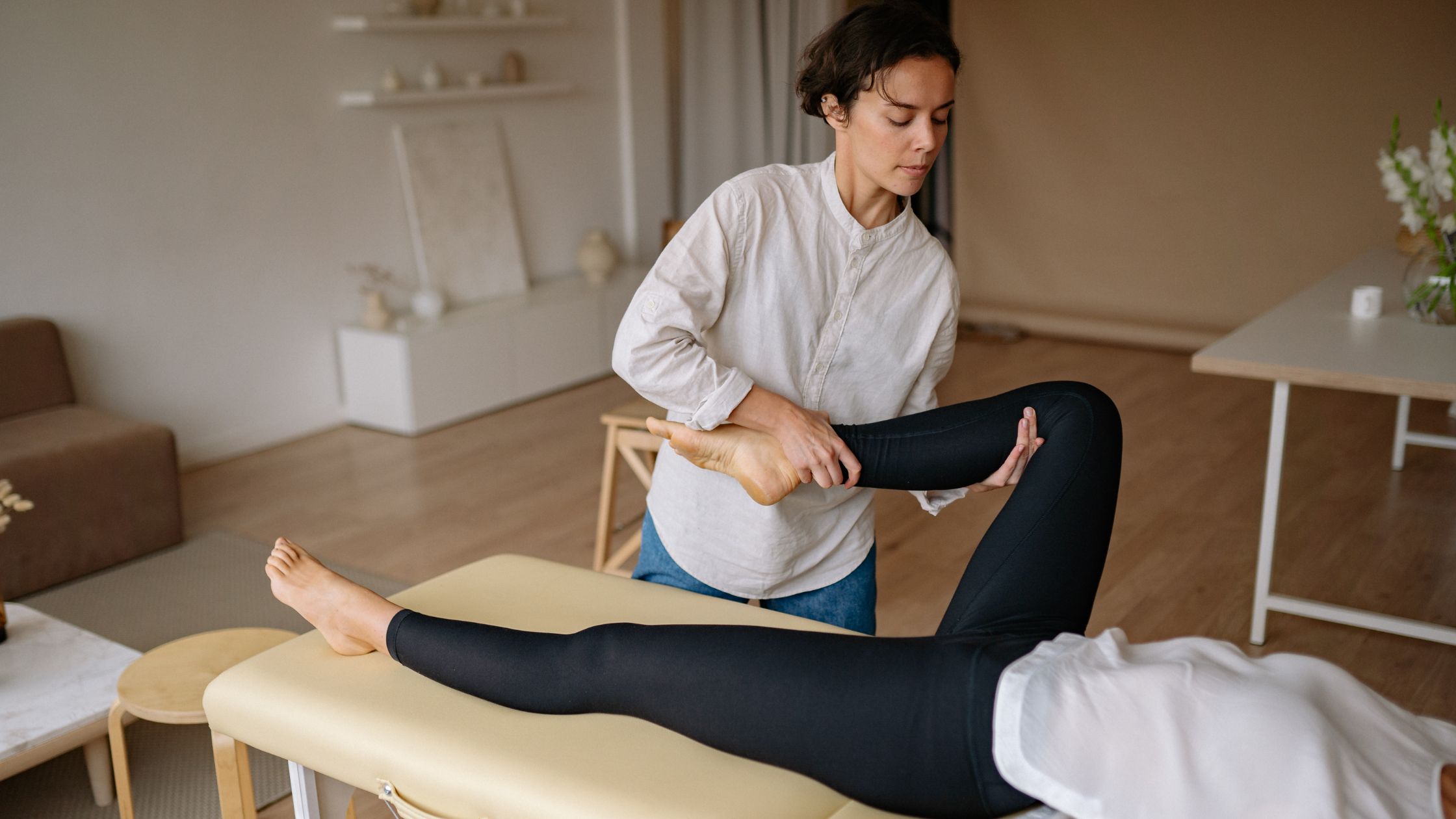
A few habits support treatment between sessions. Short, deliberate breathing breaks during a stressful workday, even two or three minutes, can lower the sustained muscle activation that builds through back-to-back meetings. Noticing jaw position throughout the day, most people carry more clench than they realise, and consciously relaxing it a few times daily reduces cumulative strain on the same muscles a physiotherapist is working to release.
Treating the whole pattern, not just the sore spot
Physiotherapy in Dubai increasingly involves this kind of conversation, asking not just where something hurts but what has been happening in someone’s week, month, or year. A sore neck that keeps returning despite treatment is often telling a story that extends beyond the neck itself.
Our physiotherapists in Dubai Healthcare City take that fuller picture into account when building a treatment plan. Anyone dealing with pain that seems to track their stress levels more closely than any specific injury can reach out through our contact page to arrange an