November 12, 2019

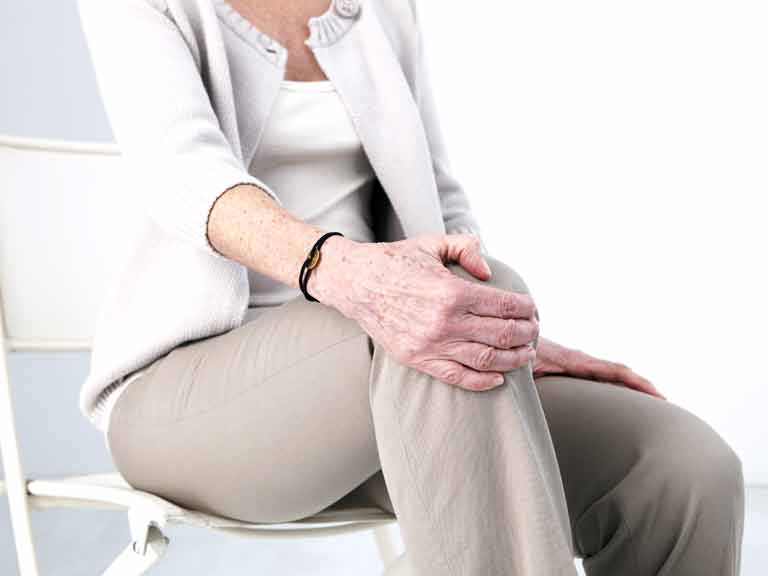
Knee pain is an umbrella term, which encompasses a variety of conditions which all cause pain around the knee. These range from soft tissue conditions such as bursitis, quadriceps or patella tendonitis and variety of bony and cartilage conditions within the knee such as joint surface (chondral) damage, cartilage tears and knee arthritis.

Dr Ishrat Azam Khan - Consultant Orthopedic Surgeon
Book an appointment with Dr. Ishrat Azam Khan | Consultant Orthopedic Surgeon | MBBS, FRCS Orth, FRCS (England), MCh Orth, Dip in Sports Medicine (Ireland), Fellow of European.

Symptoms of Knee Pain

Pain can be felt either over the front of the knee or on the either side of the knee. The pain may be felt only with certain movements or all the time. Associated symptoms could be stiffness of the knee, swelling, clicking, locking or giving way.

Treatments for Knee Pain

The treatment is aimed at the underlying cause. Assessment would include a consultation with one of our experts with a physical examination aimed at getting a working diagnosis of the possible causes. The definitive diagnosis often requires further investigations such as x-rays, ultrasound or MRI scan. Once the diagnosis is established, a definitive treatment plan would be discussed and the treatments could range from physiotherapy, to injections or possibly surgery

Should you require additional information or would like to make an appointment with Dr. Ishrat Khan please e-mail us at westminsterclinicdubai@gmail.com or call +971 4 276 5606

November 2, 2019

What is arthritis?

The term arthritis literally means inflammation of a joint but is generally used to describe any condition in which there is damage to the cartilage. Inflammation is the body’s natural response to injury. The warning signs that inflammation presents are redness, swelling, heat, and pain.

The cartilage is a padding that absorbs stress. The proportion of cartilage damage and synovial inflammation varies with the type and stage of arthritis. Usually, the pain early on is due to inflammation. In the later stages, when the cartilage is worn away, most of the pain comes from the mechanical friction of raw bones rubbing on each other.

What are the different types of arthritis?

There are over 100 different types of arthritis. The most common are:

  • Osteoarthritis

Also called degenerative joint disease, this is the most common type of arthritis, which occurs most often in older people. This disease affects cartilage, the tissue that cushions and protects the ends of bones in a joint. With osteoarthritis, the cartilage starts to wear away over time. In extreme cases, the cartilage can completely wear away, leaving nothing to protect the bones in a joint, causing bone-on-bone contact. Bones may also bulge, or stick out at the end of a joint, called a bone spur.

  • Rheumatoid Arthritis

This is an autoimmune disease in which the body’s immune system (the body’s way of fighting infection) attacks healthy joints, tissues, and organs. Occurring most often in women of childbearing age (15-44), this disease inflames the lining (or synovium) of joints. It can cause pain, stiffness, swelling, and loss of function in joints. When severe, rheumatoid arthritis can deform, or change, a joint. For example, the joints in a person’s finger can become deformed, causing the finger to bend or curve.

  • Gout

When a person has gout, they have higher than normal levels of uric acid in the blood. The body makes uric acid from many of the foods we eat. Too much uric acid causes deposits, called uric acid crystals, to form in the fluid and lining of the joints. The result is an extremely painful attack of arthritis. The most common joint gout affects is the big toe. This disease is more common in men than in women.

  • Infectious Arthritis 

Arthritis can be caused by an infection, either bacterial or viral, such as Lyme disease. When this disease is caused by bacteria, early treatment with antibiotics can ease symptoms and cure the disease.

  • Reactive Arthritis 

This is arthritis that develops after a person has an infection in the urinary tract, bowel, or other organs. People who have this disease often have eye problems, skin rashes, and mouth sores.

  • Systemic Lupus Erythematosus 

Also called lupus or SLE, this is an autoimmune disease. When a person has an autoimmune disease, the immune system attacks itself, killing healthy cells and tissue, rather than doing its job to protect the body from disease and infection. Lupus can inflame and damage a person’s joints, skin, kidneys, lungs, blood vessels, heart, and brain. African American women are three times more likely to get lupus than Caucasian women. It is also more common in Hispanic, Asian, and American Indian women.

  • Ankylosing Spondylitis

This disease most often affects the spine, causing pain and stiffness. It can also cause arthritis in the knees. It affects mostly men in their late teenage and early adult years.

  • Juvenile Rheumatoid Arthritis 

The most common type of arthritis in children, this disease causes pain, stiffness, swelling, and loss of function in the joints. A young person can also have rashes and fevers with this disease.

  • Polymyositis

Causing inflammation and weakness in the muscles, this disease can affect the whole body and cause disability.

  • Bursitis

This condition involves inflammation of the bursa, small, fluid-filled sacs that help reduce friction between bones and other moving structures in the joints. The inflammation may result from arthritis in the joint, injury, or infection of the bursa. Bursitis produces pain and tenderness and may limit the movement of nearby joints.

  • Tendinitis 

Also called tendonitis, this condition refers to inflammation of tendons (tough cords of tissue that connect muscle to bone) caused by overuse, injury, or a rheumatic condition. Tendinitis produces pain and tenderness and may restrict the movement of nearby joints.

What are the symptoms of arthritis?

There are more than 100 different forms of arthritis; symptoms vary according to the form of arthritis. Each form affects the body differently.

Arthritic symptoms generally include swelling and pain or tenderness in one or more joints for more than two weeks, redness, or heat in a joint, limitation of motion of joint, early morning stiffness and skin changes, including rashes.

What you can do?

  • Consult a doctor who will determine the type of arthritis you have
  • Rest the joint until the pain subsides to prevent further inflammation
  • To ease the pain or stiffness of the joint, apply heat on the joint for about 15 minutes once or twice a day using a hot water bottle, towel or an infrared lamp
  • Take painkillers or anti-inflammatories, as recommended by your Doctor
  • If you are overweight, try to reduce weight to lighten the load on weight-bearing joints
  • Participate in regular exercise.

Summary

From learning about the importance of exercising regularly to fully understanding your arthritis medications, the information contained in this section is meant to provide you with insights, information, and tips that can be used by you to help make living with arthritis a little bit more manageable.

For people with arthritis, learning to make it part of your life can be difficult. However, learning as much as you can about your particular type of arthritis and actively working with your arthritis treatment team are two very effective ways of regaining control over your life. There is plenty of information, some specific to arthritis, and some not, that can be very helpful to someone facing the challenges associated with having a chronic or lifelong disease.

Our suggestion is – do not let arthritis beat you. Take control. How? Arm yourself with as much information as possible. Learn from the experiences of others in similar circumstances. What we are presenting here is a virtual toolbox of tips for living well with arthritis. Some may work for you one day and not the other. Some may work for you but not others. That is why we’ve tried to cover several topics. There are plenty of tools or tips here. Use them or refer to them when you need them. Call upon them when you require help.

Should you require additional information or would like to make an appointment with Dr. Ishrat Khan please e-mail us at westminsterclinicdubai@gmail.com

Disclaimer: All contents on this site are for general information and in no circumstances information be substituted for professional advice from the relevant healthcare professional, Writer does not take responsibility of any damage done by the misuse or use of the information.



Erectile Dysfunction - Andrology - Dubai
October 22, 2019

Andrology is an area of medicine concerning men’s health. According to the definition of the World Health Organization (WHO), andrology is engaged in all aspects of male reproductive health.


The Clinical Science of Andrology deals with the prevention, diagnosis, treatment, and rehabilitation of:

  • Male fertility diagnostics and therapy (including but not limited to: subfertility diagnostics; and early therapeutic interventions to improve healthy live birth outcome; clinical advice for patients considering fertility treatment; preparation and selection of sperm for use in fertility treatment, use of donated sperm);
  • Male contraception and family planning (including but not limited to: male contraception; Post- vasectomy and post-vasectomy reversal semen analysis);
  • Sperm banking and fertility preservation (including surgical sperm retrieval including following traumatic testicular injury; sperm banking where fertility is threatened; preparation and selection of sperm for use in fertility treatment);
  • Paternally heritable disease (including potential and definite risks to offspring from lifestyle, disease or therapeutic interventions);
  • Male sexual dysfunctions (including erectile dysfunction, disturbances of desire, arousal, ejaculatory and orgasmic dysfunctions);
  • Male endocrine dysfunctions (including disorders of sexual development; hypogonadism; male aging and other conditions from puberty to senescence);
  • Gamete donation (including detailed screening and familiarity with ethical and social issues);
  • Gender reassignment (including issues around gamete storage and future use);
  • Genital tract pathologies (including infections and inflammations or cancers relating specifically to the male);
  • Prevention of transmission of blood-borne viruses (including fertility treatment for serodiscordant/concordant couples for HIV, Hep B and Hep C);

 The diagnosis and management of penis problems include lack of firmness of penis erection or bending and deformity of the erect penis (Peyronie’s disease). Further areas of andrological activities are:

  • The diagnosis and management of testicle problems and prostate disorders, for example, prostate enlargement, inflammation or cancer (the latter being mostly a genuine problem of urology) prevention and rehabilitation, primary and secondary hypogonadism, delayed puberty, adverse drug side effects and environmental pollutants with regard to fertility, cryopreservation of semen and testicular tissue, forensic paternity problems, family planning, male contraception and basic andrological research.

All these issues are of increasing importance for the further development of clinical andrology.


In summary, the following subjects are within the field of responsibility of andrology:

  1. Male fertility and infertility
  2. Erectile dysfunction and sexual disturbances
  3. Aging male and hormone replacement therapy
  4. Male reproductive tract inflammation and infection
  5. Testicle problems (testicular tumors)
  6. Prostate disorders (BPH, carcinoma)
  7. Primary and secondary hypogonadism
  8. Delayed puberty
  9. Prevention and rehabilitation
  10. Adverse drug side effects
  11. Environmental pollutants
  12. Cryopreservation of semen and testicular tissue
  13. Forensic paternity problems
  14. Family planning
  15. Male contraception
  16. Basic andrological research


Useful websites

British Andrology Society

http://www.britishandrology.org.uk/.


Basic and Clinical Andrology

Articles on many aspects of Andrology and related disorders. https://bacandrology.biomedcentral.com/


Andrology for the Clinician

Definition, Clinical Issues, and Prevalence. https://link.springer.com/book/10.1007/3-540-33713-X

Handbook of Andrology, second Edition

https://andrologysociety.org/docs/handbook-2nd/handbook-of-andrology-second-edition-english.aspx


National Institute of Diabetes and Digestive and Kidney Diseases – Urologic Diseases

https://www.niddk.nih.gov/health-information/urologic-diseases


October 8, 2019

Hip pain is an umbrella term, which encompasses a variety of conditions which all cause pain around the hip. These range from soft tissue conditions such as trochanteric bursitis, hip tendonitis and labral tears to bony conditions such as femoro-acetabular impingement and hip osteoarthritis.

Book an appointment with Dr. Ishrat Azam Khan | Consultant Orthopedic Surgeon | MBBS, FRCS Orth, FRCS (England), MCh Ortho, Dip in Sports Medicine (Ireland), Fellow of European.

Symptoms of Hip Pain

Pain can be felt either over the front of the hip or on the outside of the hip. The pain may be felt only with certain movements or all the time. Associated symptoms could be stiffness of the hip or painful clicking.

Treatments for Hip Pain

The treatment is aimed at the underlying cause. An assessment would include a consultation with one of our experts with a physical examination aimed at getting a working diagnosis of the possible causes. The definitive diagnosis often requires further investigations such as x-rays, ultrasound or MRI scans. Once the diagnosis is established, a definitive treatment plan would be discussed and the treatments could range from physiotherapy to injections or possibly surgery.

Hip Osteoarthritis

Hip osteoarthritis, also known as “wear and tear” arthritis is a common condition, particularly in older patients. The joint becomes roughened and this leads to both pain and stiffness of the hip.

Symptoms of Hip Osteoarthritis

The initial symptoms are usually mild with an ache felt in the groin on walking. As the hip gets more worn, increasing stiffness and pain are noticed and the pain becomes more frequent. When severe, pain can be felt at rest and at night, disturbing sleep. The stiffness often is noticed as increased difficulty with simple tasks such as putting on shoes and socks or cutting toenails.

Treatments for Hip Osteoarthritis

In mild cases, often the symptoms can be controlled with painkiller tablets or anti-inflammatory tablets. A stick can be used to aid mobility and activity modification or losing weight may also help. Physiotherapy can help to maintain the movement around the hip.

Injections can sometimes be useful for short-term relief of symptoms but don’t usually provide long-term improvement.

When simple measures such as these are no longer working, a hip resurfacing or replacement should be considered. This is an operation to replace the worn-out part of the joint with artificial components, which can be metal, plastic or ceramic, depending on the anatomy and patient requirements.

Both operations take about 2 hours and for either operation an inpatient stay of 4-5 days is required. Crutches are required for about 4 weeks and once the wound pain has settled, most patients find that they are left with a hip with greater movement and a lot less pain than previously. As with a natural hip, the replacement doesn’t last forever and can wear out or become loose over time. This could require a further procedure, a revision hip replacement. The great majority are however good for ten years or more.

Should you require additional information or would like to make an appointment with Dr. Ishrat Khan please e-mail us at westminsterclinicdubai@gmail.com

Disclaimer: All contents on this site are for general information and in no circumstances information be substituted for professional advice from the relevant healthcare professional, Writer does not take responsibility of any damage done by the misuse or use of the information.


October 6, 2019

Pain in the lower back is a pathology caused by various factors, such as excessive stress or poor posture. Less common is the lower back pain caused by more serious problems like herniated discs. The most common cause of lower back pain is because the lumbar spine, the final segment of the spine, has endured the excessive weight. The main symptom of this injury is pain that is usually located in the lower back, sometimes reaching the legs. This pathology may cause alterations in the different structures that form the backbone such as ligaments, muscles, spinal discs and vertebrae. In addition, lower back pain can be accompanied by a muscular contraction in the area, limiting mobility in this section of the body.

Should you require additional information or would like to make an appointment with Dr. Ishrat Khan please e-mail us at westminsterclinicdubai@gmail.com

Disclaimer: All contents on this site are for general information and in no circumstances information be substituted for professional advice from the relevant healthcare professional, Writer does not take responsibility of any damage done by the misuse or use of the information.


International Regenerative
August 27, 2019

5th INTERNATIONAL REGENERATIVE MEDICINE CONCLAVE 2019

by DR. ASHOK KUMAR

TOPIC: Role of combined intraosseus and intra-articular injections of PRP with BMAC and micro fragmented adipose tissue (MAT) in osteoarthritis.


December 5, 2018

Fasting in Ramadan – how important is water?

Soon the time has come again. Ramadan is coming. A whole month full of self-discipline, but also enormous joy and spiritual purification for all Muslims.

As urologists, we know that in the Ramadan, or soon after, the number of patients with kidney stones is rising sharply. Good for us, but not good for our patients.

Where does that come from?

Well, our kidneys produce urine. It is, of course, mainly made of water.

Did you know that humans are 60% water? Some organs more (brain and heart 73%, lungs 83%, muscles 79%) and others less (bones 31%!).

With the water, our kidneys transport residues and pollutants from our organism and regulate our water balance. These substances are dissolved as salts in water, and that is then urine.

You’ve probably noticed that urine becomes brighter and clearer with a lot of drinking (the salts in the urine are then severely diluted) or with less drinking yellow or even brown (the salts are then highly concentrated).

Imagine you have a glass of water. In that you then pour table salt under stirring. First the salt dissolves completely, but as the concentration increases this process becomes slower and salt crystals remain visible. The concentration of salt has exceeded the dissolution capacity of the water.

If you add more water again now, the salt solution will be diluted and the crystals will dissolve again..

And that’s exactly what happens in the urine. If we drink too little, the salts can no longer be dissolved and form salt crystals (mostly calcium and oxalate). They can then clump together and eventually grow into a kidney stone. It is unknown how quickly this can happen, but we know from experience that this process can only take days in some patients.

When fasting, you have no water intake for about 14 hours during Ramadan. If you do not drink enough during the night hours, there will be an overconcentration of the urine and thus a risk for stone formation.

The daily recommended amount of drinking in Europe is 2-2.5 litres of water a day. Of course, we do not forget that we live here in a very hot country. We lose about 1/2 litre of water with our breathing, and 1-1.5 litres of water while sweating. This needs to be replenished. A drinking volume of 3-3.5 litres may be needed.

Whether you’re fasting or not, in a country like the UAE, you should always drink plenty. Ideally, of course, spread over the day, but that’s not always possible. The amount of water to dilute and dissolve the salts is crucial.

So, don’t forget water. For it to be a relaxed Ramadan.

Call Now Button