

Walk into any padel facility in Dubai on a weekday evening in October and you will struggle to find a free court. The sport has taken hold here in a way that felt sudden but makes complete sense: it is social, it is competitive without requiring years of technical training, and it fits the city’s appetite for activity that doubles as a social event. CrossFit boxes across the city are similarly packed. Gyms that were quiet three years ago now have waiting lists for group classes.
This is genuinely good. More people moving is better than fewer people moving, and the range of indoor options Dubai offers means that staying active through summer is entirely realistic for most residents.
But every sport has a specific injury profile. And the three activities that dominate Dubai’s indoor fitness scene, padel, CrossFit, and conventional gym training, each produce a recognizable set of problems when things go wrong. Knowing what those are does not make the sport less worth doing. It just means that when something starts to feel off, you know what you are probably dealing with and what to do about it.
Padel: the shoulder and the ankle
Padel looks low-impact from the outside. The court is enclosed, the rallies are fast but not brutal, and the underarm swing feels far less violent than a tennis serve. That impression is misleading.
The rotational demand on the shoulder in padel is constant. Players are repeatedly loading the rotator cuff through a range of motion that combines internal rotation, acceleration, and sudden deceleration, often while moving laterally and reaching across the body. Over a season of regular play, this accumulates. The injury that presents most commonly is rotator cuff irritation or partial tearing, often in the dominant shoulder, often in players who have been getting away with a technique problem for months.
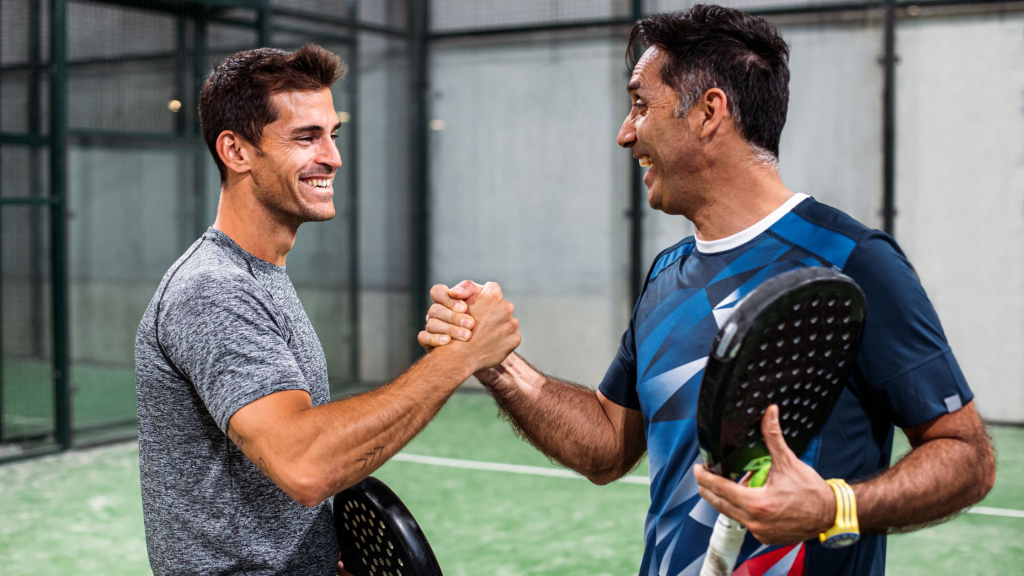
Shoulder pain in padel players tends to be dismissed early because it is not acute. It builds. A dull ache after a session becomes a dull ache during a session becomes a sharp catch on certain shots. By the time a player comes in for assessment, there is usually a longer history than they initially report.
The ankle is the other vulnerability. The enclosed court encourages aggressive lateral movement and sudden direction changes on a hard surface. Ankle sprains are common, particularly in players who have had a previous sprain that was not fully rehabilitated. An ankle that was never properly assessed after an earlier injury has residual instability that padel’s movement demands expose very efficiently.
- Rotator cuff strain: Builds gradually through repetitive overhead and rotational loading; often misread as general shoulder tightness until it limits range of motion.
- Lateral ankle sprain: Typically occurs on sudden direction changes; risk is higher in players with a history of previous sprains and no structured rehab.
- Elbow tendinopathy: The padel grip and wrist snap through contact loads the lateral elbow; symptoms mirror tennis elbow and respond well to early intervention.
- Knee strain: Repeated low squat positioning during play stresses the patellofemoral joint, particularly in players who also train legs heavily in the gym.
Most padel injuries are manageable when caught early. The ones that become complicated are the ones players train through for too long.
CrossFit: load, volume, and the lower back
CrossFit asks a lot of the body simultaneously: high load, high volume, high speed, and movements that require technical precision under fatigue. When all of those factors align well, it produces impressive fitness. When any one of them is miscalibrated, injury follows with some predictability.
The lower back is the most common casualty. Deadlifts, cleans, and kettlebell swings all demand a braced, neutral spine under significant load. When technique breaks down under fatigue, which is structurally built into many CrossFit workouts, the lumbar spine absorbs forces it was not designed to absorb repeatedly. Back and spine pain from CrossFit training is often not one dramatic incident but the result of repeated small insults to the same structures over weeks.
Shoulder injuries are the second most common presentation. The volume of overhead pressing, pull-ups, and gymnastic movements in CrossFit programming loads the shoulder in ways that recreational gym training does not. Rotator cuff irritation, labral stress, and AC joint problems all appear regularly in CrossFit athletes, often in people who scaled up their training volume faster than their tissue could adapt.
The knees take consistent stress from squat volume, box jumps, and running intervals. Patellar tendinopathy is particularly common in athletes who train five or more days a week, and it is one of the more stubborn conditions to resolve once it is established.
What distinguishes CrossFit injury patterns from those of other sports is the culture around them. Training through discomfort is normalized in ways that can make it harder for athletes to recognize when discomfort has become damage. The line between productive intensity and tissue overload is real, and it is worth knowing where it is.
Gym training: the injuries that come from imbalance
Conventional gym training produces a different injury profile, and it is less dramatic but no less common. The mechanism is usually imbalance rather than acute overload.
Most people who train in a gym have a program shaped by preference: more pressing than pulling, more quad work than posterior chain, more work on the muscles they can see in a mirror. Over time, strength imbalances develop that alter joint mechanics. The shoulder that has been bench pressed for two years without equivalent rowing work develops anterior dominance that strains the posterior rotator cuff. The athlete who squats heavily without adequate hip flexor mobility loads the lower back through every rep.
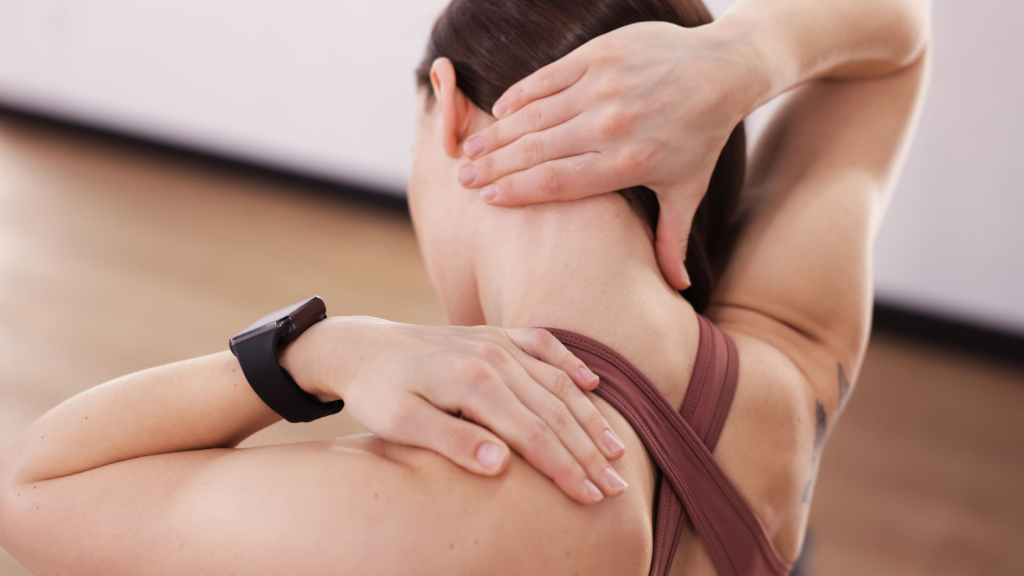
Hand and wrist conditions are increasingly common in gym training populations, driven by grip-heavy movements combined with the hours spent on phones and keyboards outside of training. The wrist absorbs cumulative load from both directions and has limited capacity to signal distress until the problem is already established.
Knee injuries in gym settings often trace back to poor movement patterns rather than excessive weight. A squat with significant knee valgus, where the knees track inward under load, stresses the ligaments of the knee and the medial compartment of the joint in ways that a technically sound squat at the same weight does not.
The common thread
Across all three activities, the injuries that become serious share a common history: an early warning that was ignored, a training schedule that continued without modification, and a gradual escalation from discomfort to damage.
None of these sports need to be avoided. Padel, CrossFit, and gym training are all activities where the benefits, when the activity is done with reasonable attention to load and recovery, significantly outweigh the risks. The goal is not caution for its own sake. It is recognizing the specific signals each sport produces and knowing that our orthopedic specialists at Westminster Multispecialty Clinic in Dubai Healthcare City are the right people to assess them when they appear.
An injury that is two weeks old is a different problem from one that is six months old. The gap between those two versions is almost always a decision that felt reasonable at the time.
If something has been bothering you through your training and you have been waiting to see if it resolves, it probably will not. Tell us what is going on and we will help you work out what to do about it.